
THE WORK OF CALEB WIEMAN
INDEPENDENT BUILDER / 2026
From workflows
to worlds.
I build software that moves work forward.
And experiences that take it somewhere new.
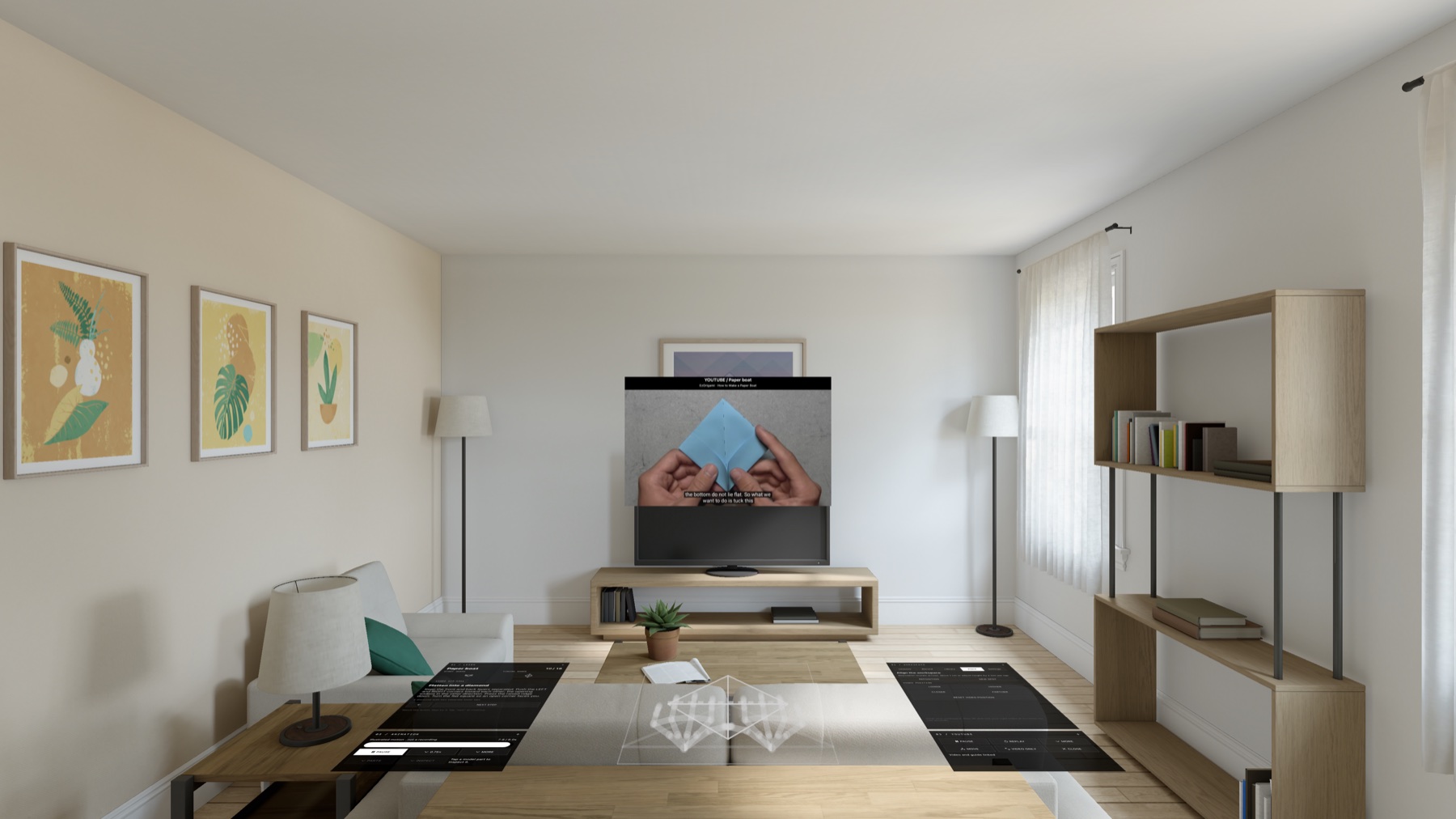
In the space around you.SASEHACKS 2026
SIMULATOR CAPTURE
Business software. Spatial computing. Websites. Experiments.
Including the AIGENTIC archive01 / THE COLLECTION
Curiosity, put to work.
A closer look at what I've made,
how it works, and where it stands.
24 PROJECTS / SELECT A PROJECT TO EXPLORE
SASEHacks 2026
GhostHands
A hands-on lesson, placed right in front of you.
Original · collaborative hackathon project
SASEHacks 2026GhostHands
A hands-on lesson, placed right in front of you.
Original · collaborative hackathon projectOriginal · collaborative hackathon project / 2026
GhostHands
GhostHands brings demonstrations out of a flat video and onto a real tabletop. Translucent hands, animated models, spoken instructions, and reference video share one spatial workspace on Apple Vision Pro.
What I built
- A table-anchored workspace with animated paper-boat instructions and hand-joint recording and replay.
- Interactive teaching models for engines, turbines, gears, brakes, pumps, cams, belts, and crank mechanisms.
- Lesson authoring with written steps, video timestamps, fingertip-placed arrows, and importable lesson files.
- Voice commands, offline narration, and an experimental iPhone-to-Apple Watch haptic relay.
The idea behind it
Watching someone do a task is different from understanding where your own hands should go. GhostHands explores that gap by putting the demonstration where the work happens.
My contribution
Built with Ethan Holm at SASEHacks. My work centered on the native spatial workspace, interaction, learning tools, mechanical labs, and companion-device experiments.
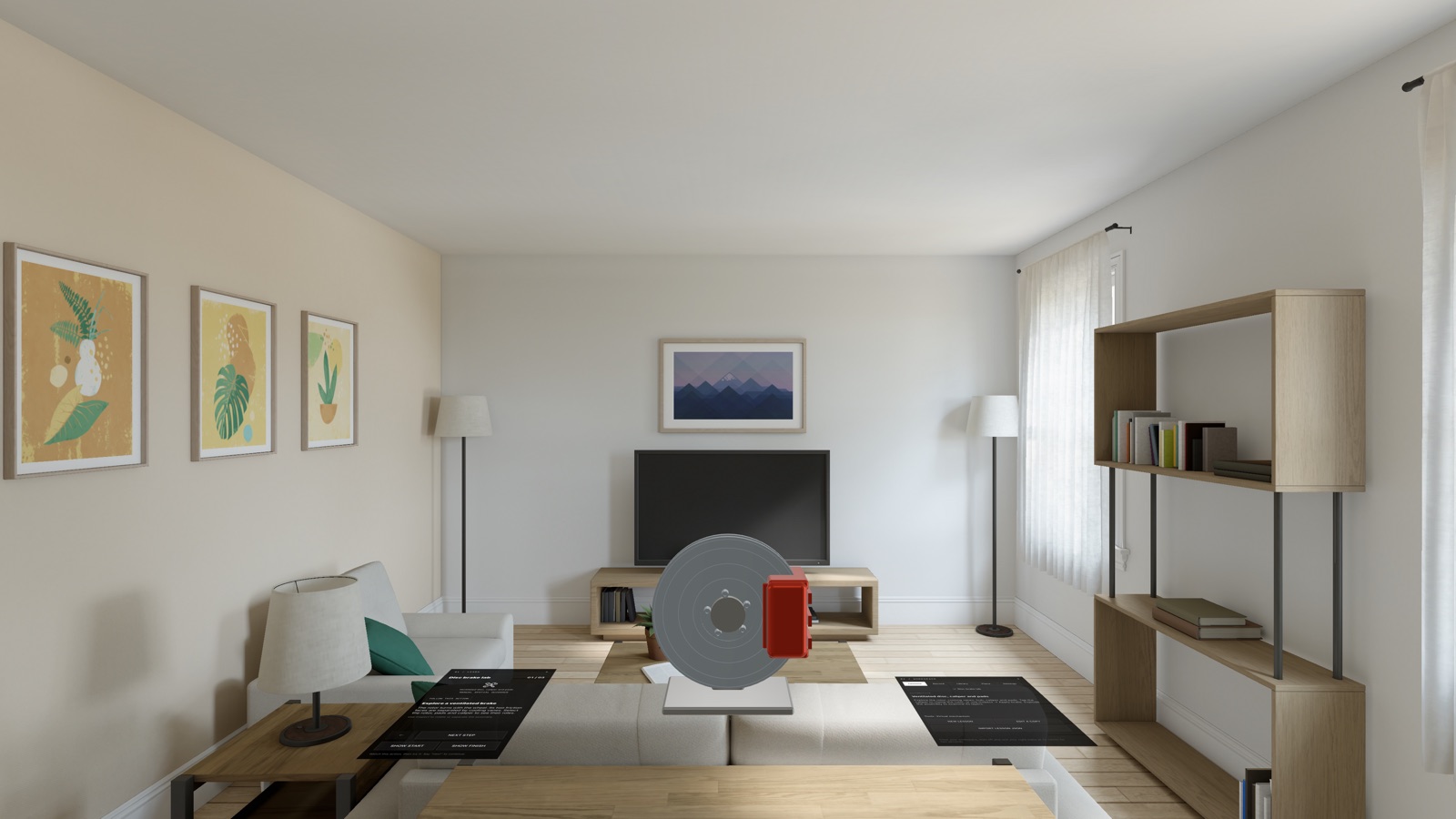
Submitted to SASEHacks. The images are simulator captures. Demonstrations are authored illustrations; arbitrary YouTube videos are not automatically converted to 3D. Watch feedback remains experimental.
 Experimental port
Crank
An industrial horror game you operate with your hands.
Independent visionOS adaptation
Experimental portCrank
An industrial horror game you operate with your hands.
Independent visionOS adaptationIndependent visionOS adaptation / 2026
Crank
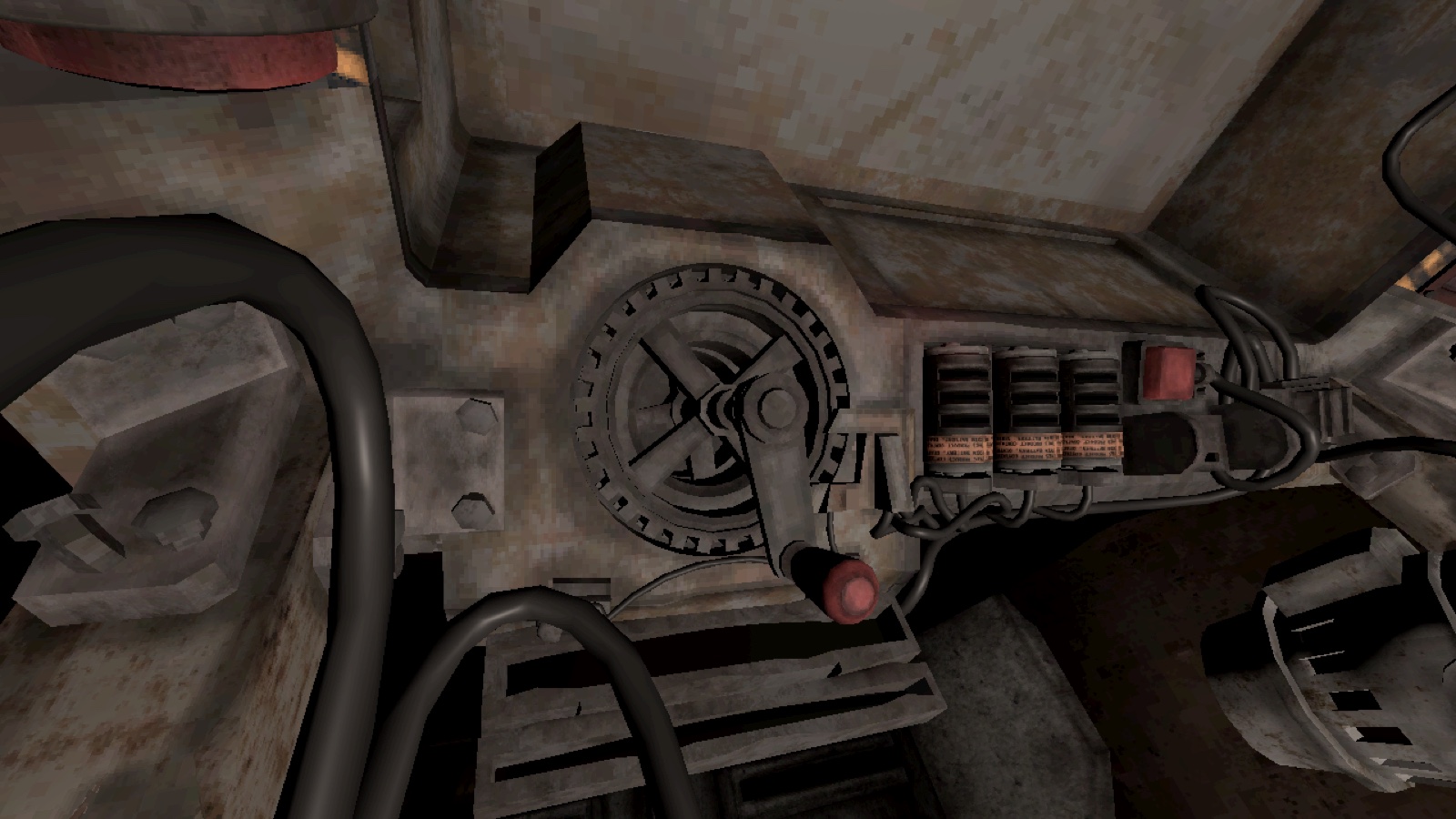
A native Apple Vision Pro adaptation of Crank It! that turns the game's machinery into a spatial interaction problem: a lift, physical controls, a CRT console, and the tension of working in a confined industrial space.
What I built
- A themed three-dimensional CRT menu and equipment console, designed for mixed reality.
- Physical, look-and-pinch, and hybrid controls with adjustable interaction settings.
- Placement and seated/reclined calibration, spatial audio, and revised pause and return flows.
- Iterations on the lift, crank, keyboard interactions, cables, collision, lighting, and lifecycle recovery.
The idea behind it
A port becomes interesting when the original interaction is rethought for the device. Here, the challenge was making machinery feel usable with bare hands while preserving the game's atmosphere.
My contribution
Native adaptation, spatial interface, control design, and integration work. Original Crank It! by James Dornan and Mike Klubnika; original game content retains its creators’ authorship.
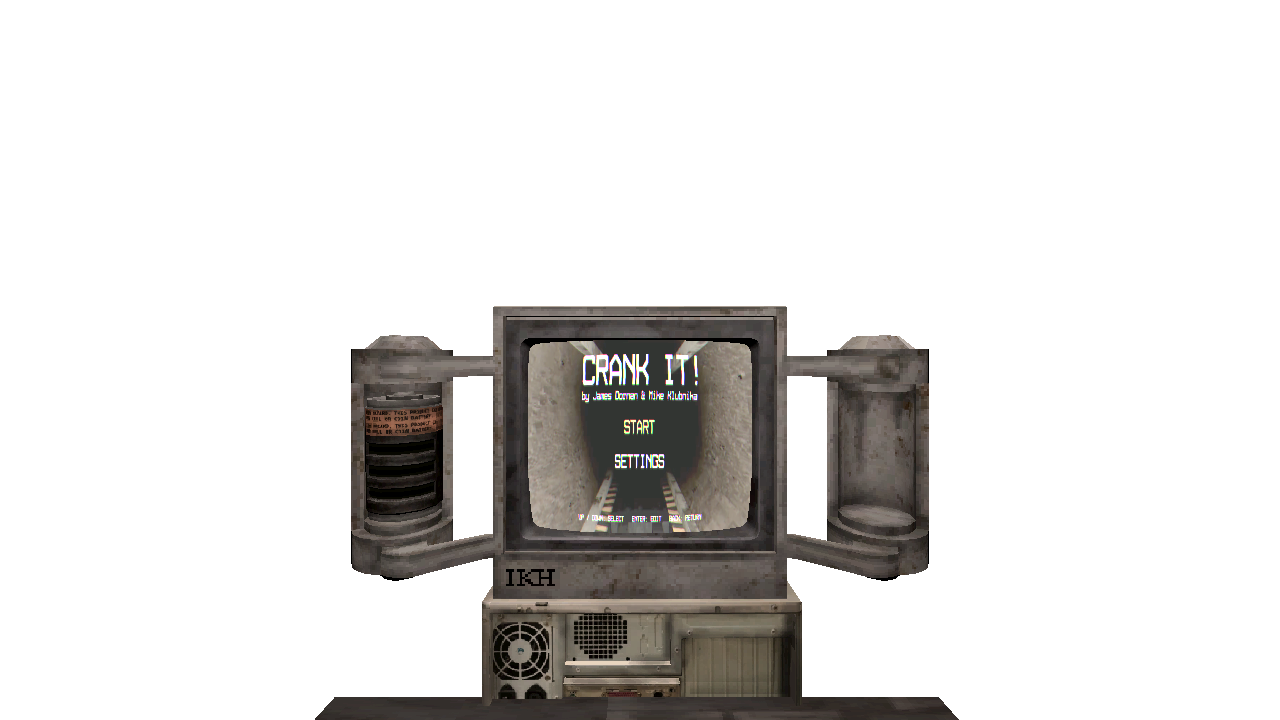
Personal experimental adaptation, not an official release. Headset comfort and final interaction quality remain iterative. No game download is distributed here.
 Public product
Wieman OS
One private console for an independent operator.
Original software product
Public productWieman OS
One private console for an independent operator.
Original software productOriginal software product / 2026
Wieman OS
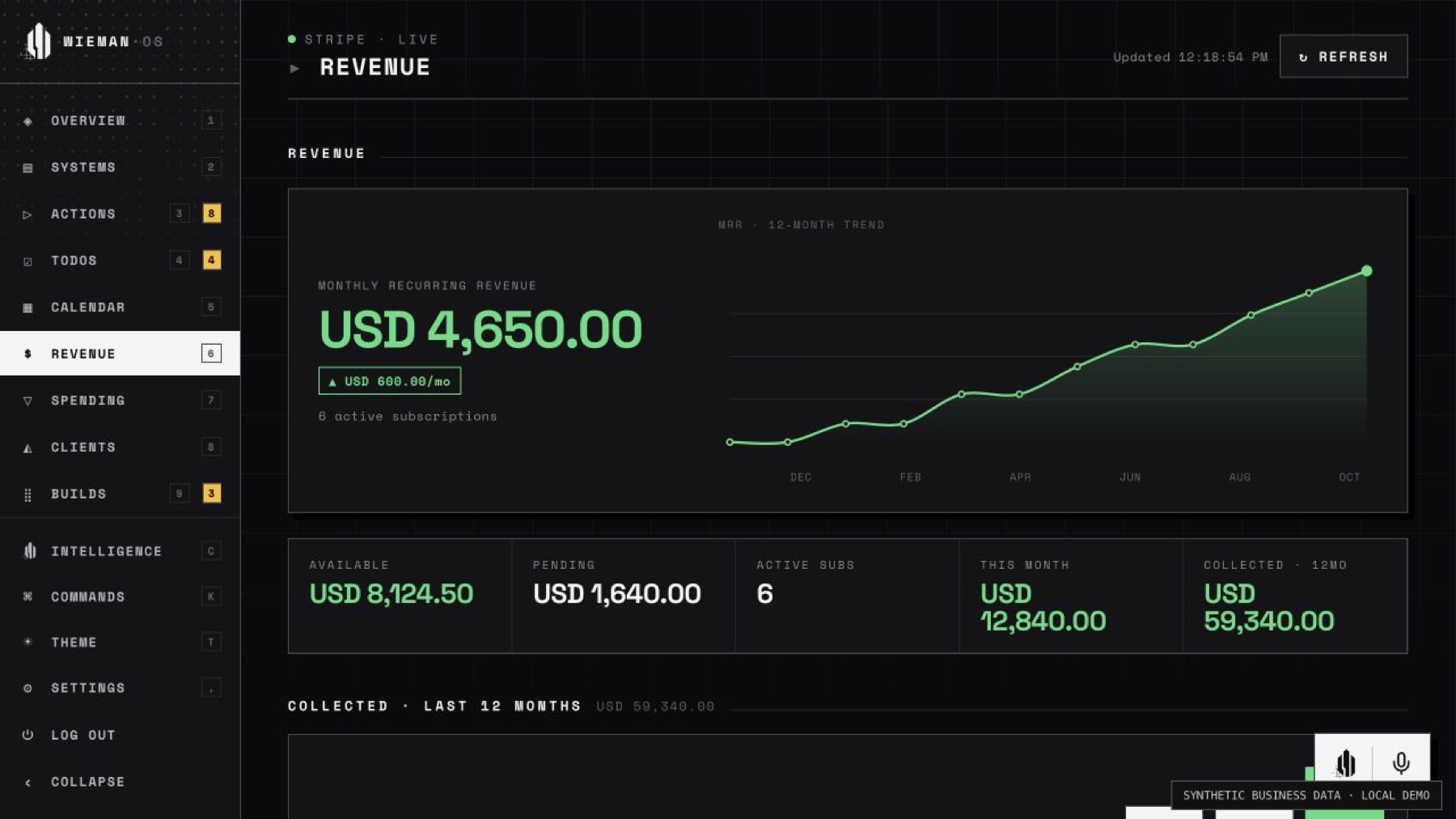
Wieman OS brings the moving pieces of a service business into one workspace: clients, follow-ups, tasks, revenue, connected tools, and an AI copilot. It is designed to run in the owner's hosting and database accounts.
What I built
- An operations overview connecting the client pipeline, daily priorities, and financial reporting.
- Connections for supported email, calendar, billing, hosting, and AI services.
- A contextual copilot with review and confirmation around sensitive actions.
- A separate public demo using synthetic business records, plus a guided installation path.
The idea behind it
Running a small business often means constantly switching between disconnected tools. The console gives the operator one place to regain context and decide what needs attention.
My contribution
Product design, application development, integrations, public demo, and the installation experience.
The public demo uses sample data and responses. A production installation requires the owner's provider accounts and permissions.
 Web + visionOS prototype
POLY
Spread an idea around the room. Follow its connections.
Collaborative academic prototype
Web + visionOS prototypePOLY
Spread an idea around the room. Follow its connections.
Collaborative academic prototypeCollaborative academic prototype / 2026
POLY
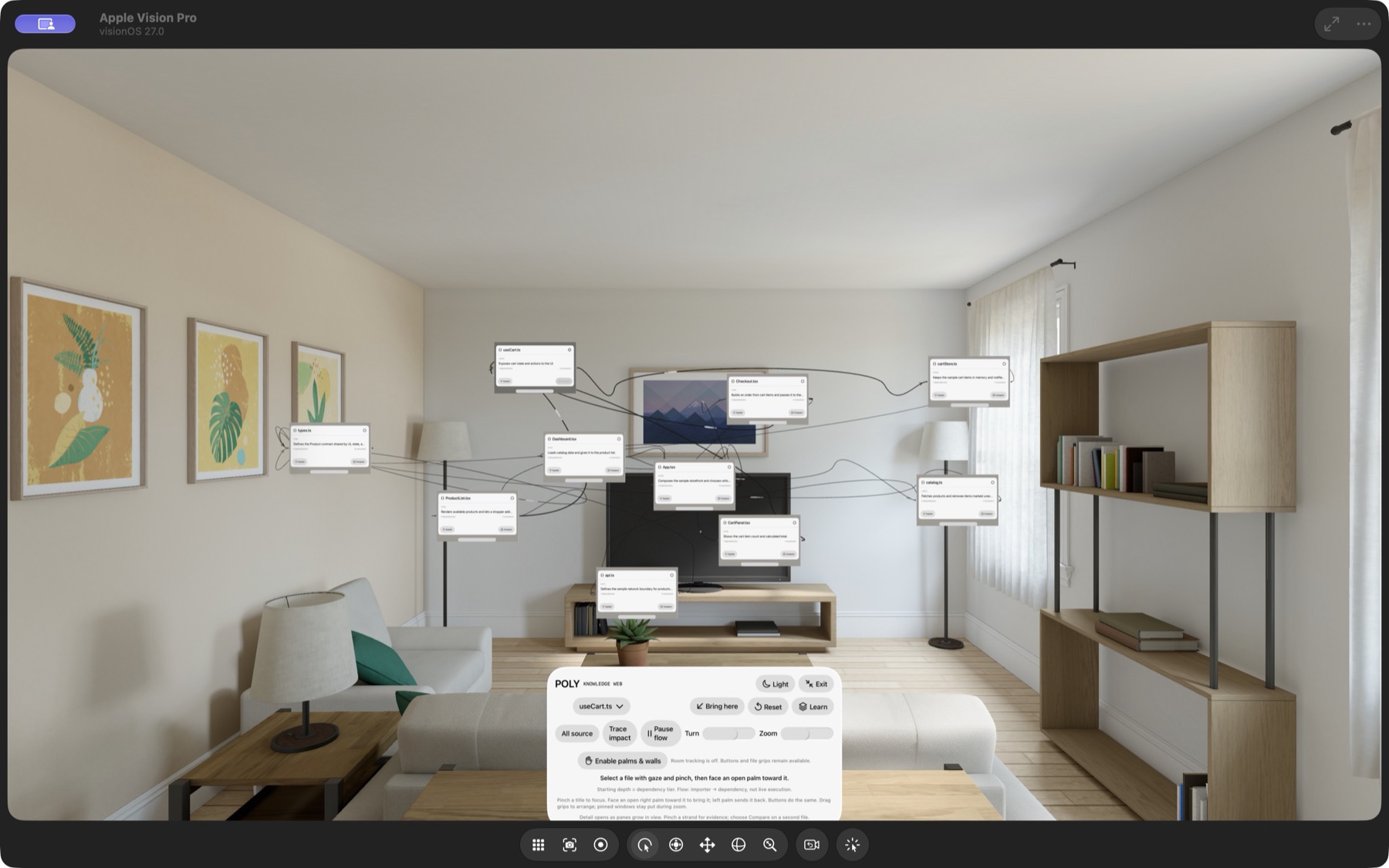
POLY explores spatial learning through connected code, anatomy, and other systems. Instead of flattening every relationship into a document, it gives the learner a map they can arrange, inspect, and follow.
What I built
- A web study workspace and a native Vision Pro prototype with connected, movable source panes.
- Code imports, dependency tracing, expandable readers, and grounded explanations.
- Surround layouts, panel grips, resizing, and experiments with room-aware placement.
- Learning flows for exploring, tracing, comparing, explaining, and pinning evidence.
The idea behind it
Some ideas are easier to understand when their relationships stay visible. POLY asks what learning looks like when the room becomes the workspace.
My contribution
Technical prototype and native Vision Pro development within a five-person OU project team.
Academic prototype. The submitted explanation engine used deterministic logic; it should not be mistaken for a general-purpose live AI tutor. Room placement and gesture comfort remain areas of iteration.
 Native prototype
Stark Workshop & Hands
A workshop, a heads-up display, and wearable digital tools.
Fan-inspired interaction experiment
Native prototypeStark Workshop & Hands
A workshop, a heads-up display, and wearable digital tools.
Fan-inspired interaction experimentFan-inspired interaction experiment / 2026
Stark Workshop & Hands
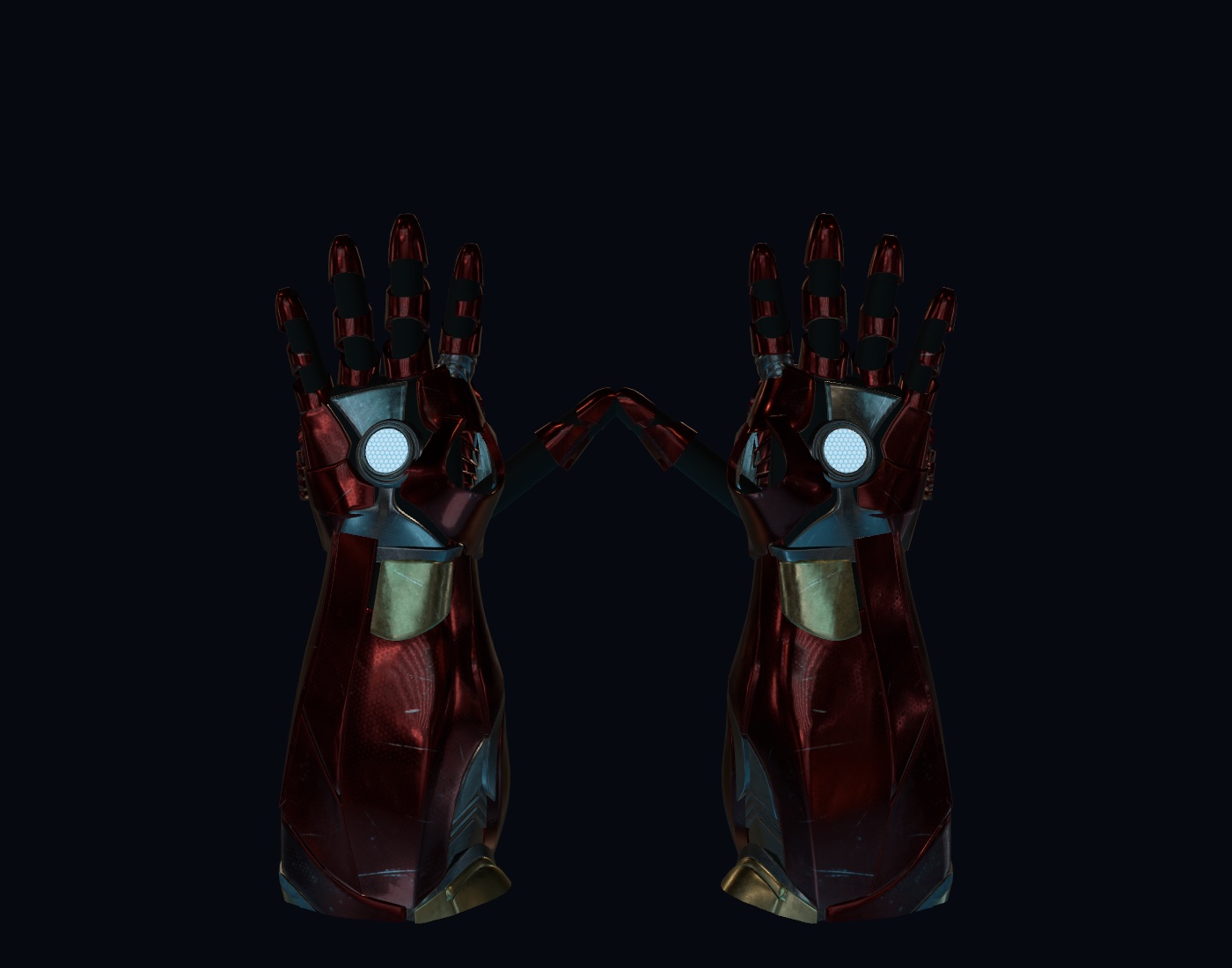
A set of Iron Man-inspired Vision Pro experiments combining an immersive workshop, holographic panels, calibrated hand armor, repulsor interactions, and a heads-up display.
What I built
- A combined native experience for workshop, passthrough, hand fitting, and HUD experiments.
- Hand calibration, articulated armor placement, and rigid/flexible material experiments.
- Movable spatial panels, palm-based interaction, floor placement, and spatial sound.
The idea behind it
This project is a test bed for interfaces that live around the body: what should follow your hands, what should stay in the room, and what should stay in view?
My contribution
Native application, interaction experiments, hand calibration, rendering integration, and iteration from headset feedback.
Unofficial fan-inspired prototype, with third-party assets. It is not affiliated with Marvel or an official product. Visual fit, tracking latency, and comfort remain experimental.
 Private prototype
Premier Fleet
Maintenance records that become a usable fleet workflow.
Business software prototype
Private prototypePremier Fleet
Maintenance records that become a usable fleet workflow.
Business software prototypeBusiness software prototype / 2026
Premier Fleet
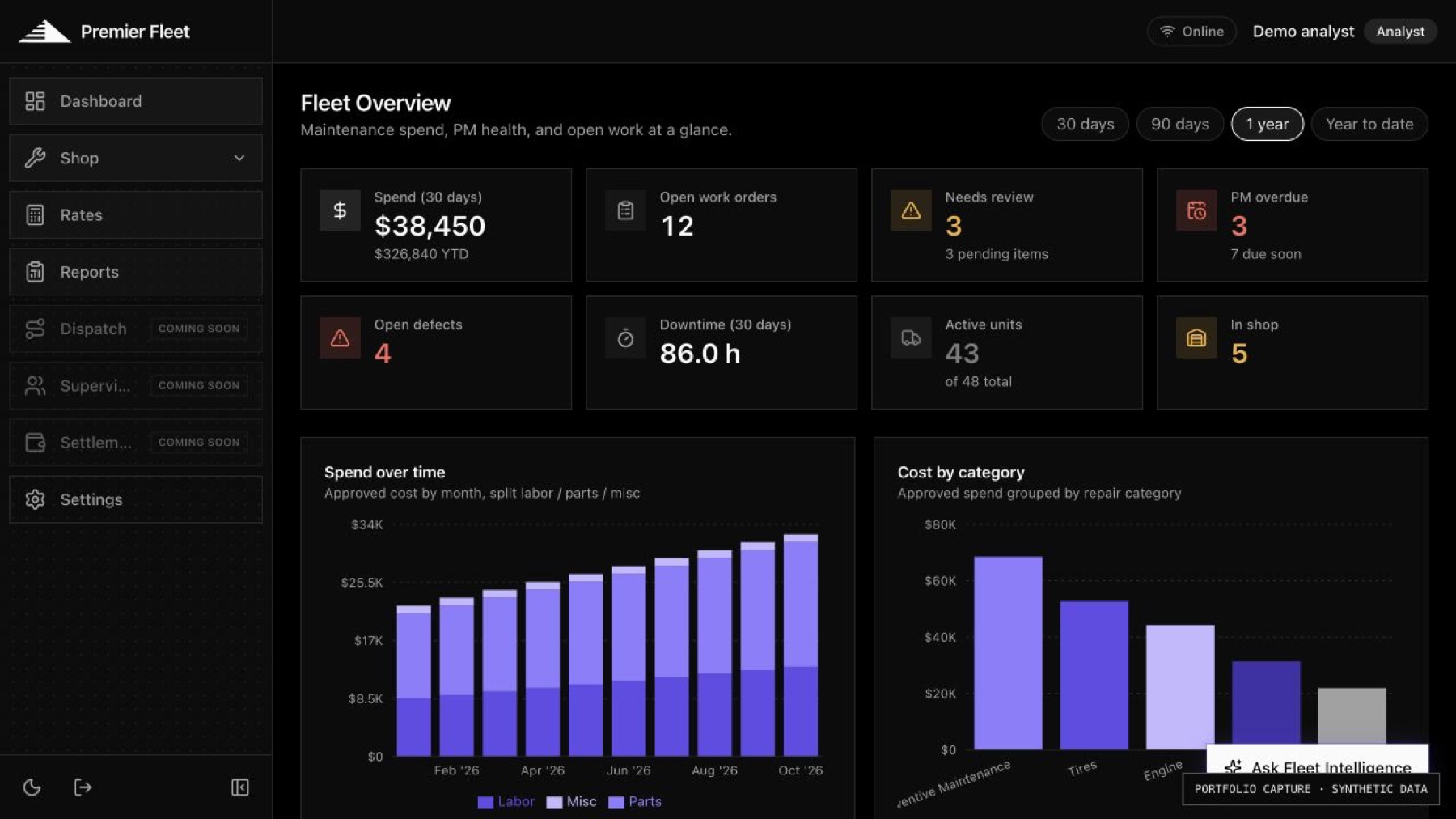
A fleet-maintenance application built around the practical work of logging service, organizing equipment records, and turning scattered maintenance information into something a team can find and act on.
What I built
- A purpose-built maintenance application with authenticated access and role-aware views.
- Structured equipment and service records, reporting, and data-driven assistant experiments.
- A workflow shaped around actual maintenance-entry requirements rather than a generic dashboard.
The idea behind it
The useful system is the one that fits the daily user's work. This build focused on getting the maintenance workflow right before expanding the platform.
My contribution
Application design, implementation, database and authentication integration, and prototype iteration.
Private prototype; not presented as an adopted production system. Customer records and internal documents are not included in this portfolio.
 Private prototype
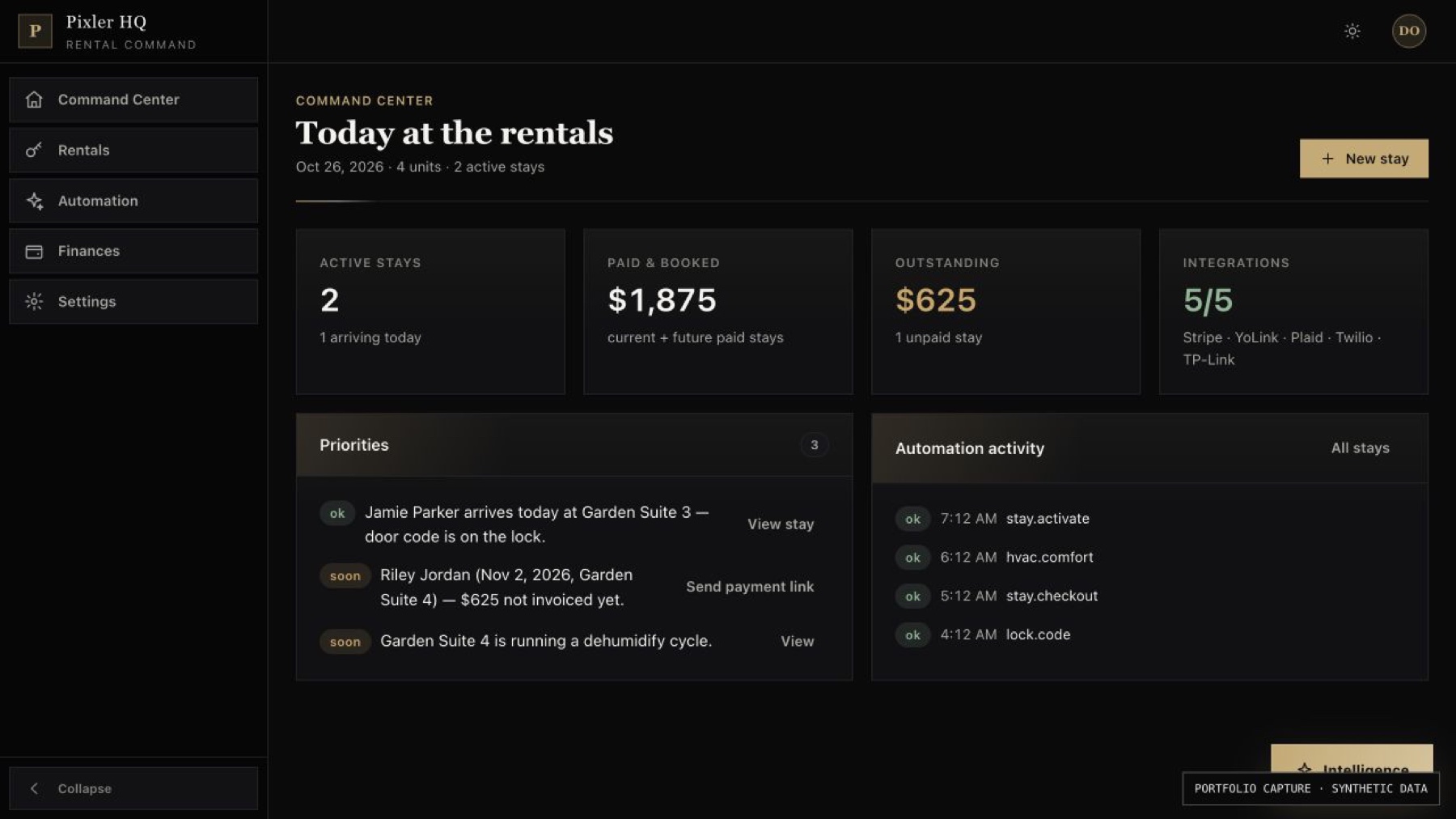
Pixler HQ
Rental operations, connected from arrival to checkout.
Real-estate software prototype
Private prototypePixler HQ
Rental operations, connected from arrival to checkout.
Real-estate software prototypeReal-estate software prototype / 2026
Pixler HQ
A real-estate operations workspace exploring how stays, units, finances, connected devices, and an assistant can work together. The project includes an automation engine for check-in and checkout workflows.
What I built
- A command center for units, stays, finance, settings, and automation history.
- Integration adapters for payments, smart locks, thermostats, banking, and messaging.
- Check-in/checkout logic, overlap checks, local-time scheduling, and a contextual assistant.
The idea behind it
A rental workflow crosses both software and the physical world. The interesting engineering is making those transitions explicit, recoverable, and visible.
My contribution
Application, interaction design, automation engine, integration architecture, and reliability work.
Prototype. Real hardware and third-party connections depend on configured accounts; a working interface is not a claim of a fully connected live property.
 Private automation + prototype
Shipping & Order Operations
From incoming orders to fulfillment and tracking.
Operational tools · Plasma Bionics
Private automation + prototypeShipping & Order Operations
From incoming orders to fulfillment and tracking.
Operational tools · Plasma BionicsOperational tools · Plasma Bionics / 2026
Shipping & Order Operations
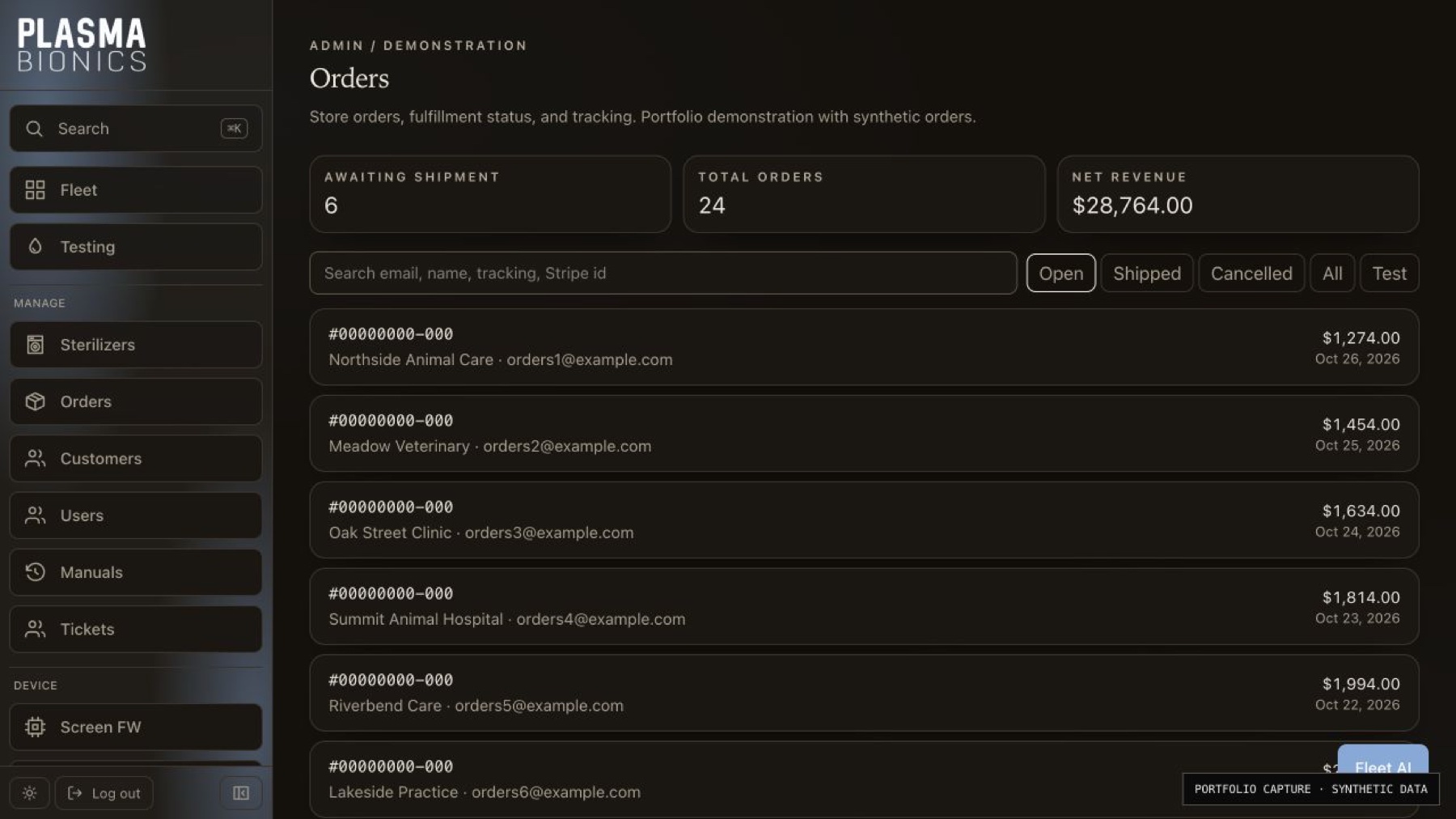
Operational software developed during my work with Plasma Bionics: an earlier WooCommerce-to-UPS shipping workflow, and a related order-management console for viewing orders, fulfillment, tracking, and customer links.
What I built
- An order-to-fulfillment workflow linking WooCommerce orders with UPS shipping.
- Automation around the repeated steps of preparing and processing outgoing orders.
- A companion order-management interface with an open-order queue, shipment tracking, and links to customer organizations.
The idea behind it
Re-entering the same information across systems creates work without adding value. This project connected the tools around the actual fulfillment process.
My contribution
Shipping-service integration and operational workflow implementation, plus order-management interface development.
The image shows the related V20 order-management console rendered locally with synthetic orders. The earlier WooCommerce-to-UPS automation was a separate workflow with no standalone dashboard.
 Engineering prototype
V20 Device Platform
A bridge between embedded hardware and a fleet dashboard.
Connected-device development
Engineering prototypeV20 Device Platform
A bridge between embedded hardware and a fleet dashboard.
Connected-device developmentConnected-device development / 2026
V20 Device Platform
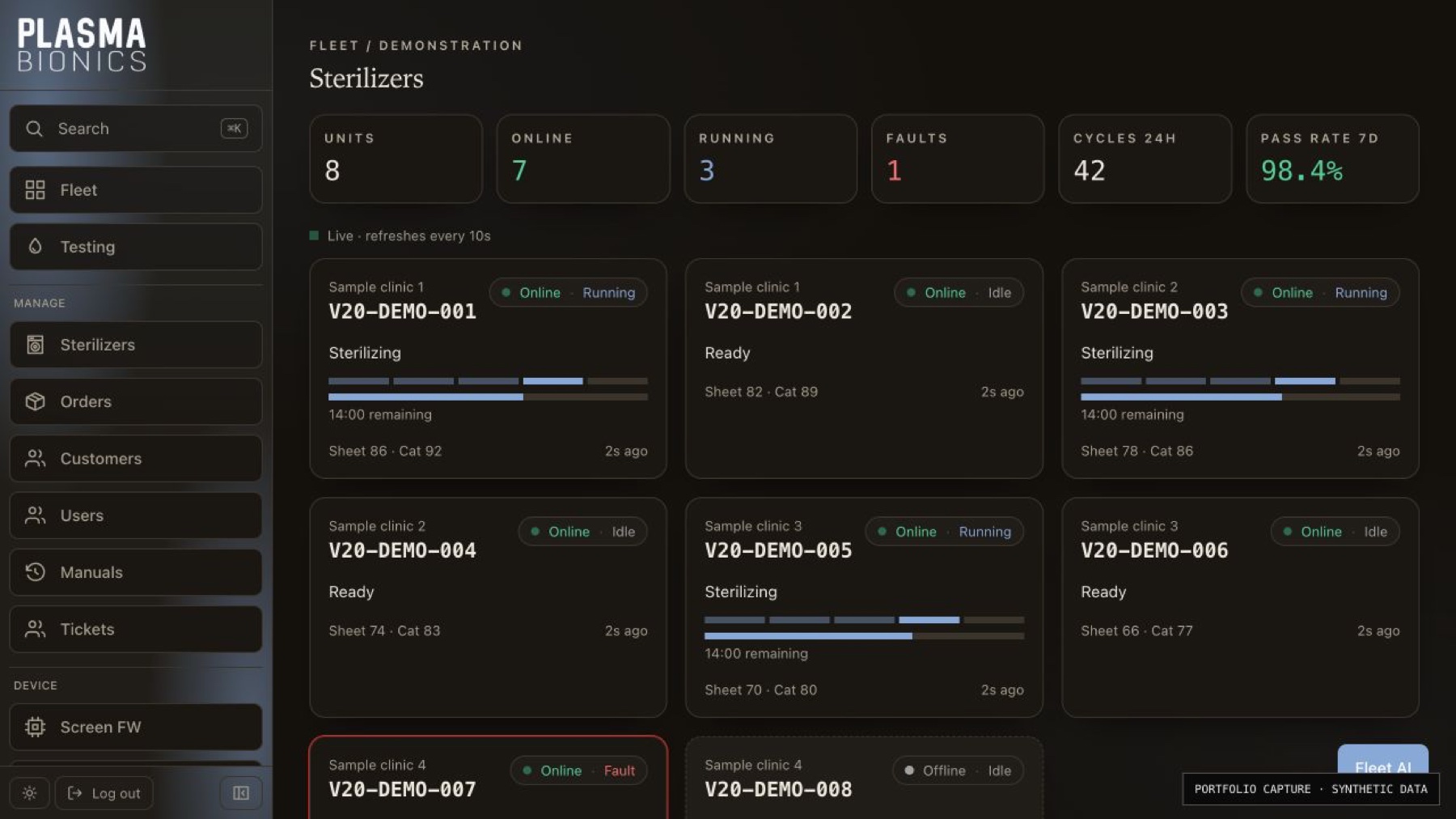
A connected-device development effort spanning an Arduino Opta firmware port and a web platform for sterilizer telemetry, device state, manuals, and support workflows.
What I built
- Firmware and interface work around an Arduino Opta-based controller.
- A fleet dashboard for telemetry, cycle history, device configuration, and diagnostic views.
- Customer-portal and assistant experiments grounded in device records and manuals.
The idea behind it
Useful device software connects three perspectives: the controller's state, the service team's diagnosis, and the operator's next action.
My contribution
Firmware port, dashboard and portal development, and device-to-cloud integration experiments.
Engineering prototype spanning firmware and web software. Hardware integration and real-device validation are separate from the dashboard demonstration.
 Archived prototype
Covenant
Financial calculations in code. Explanations in plain language.
Finance application prototype
Archived prototypeCovenant
Financial calculations in code. Explanations in plain language.
Finance application prototypeFinance application prototype / 2026
Covenant
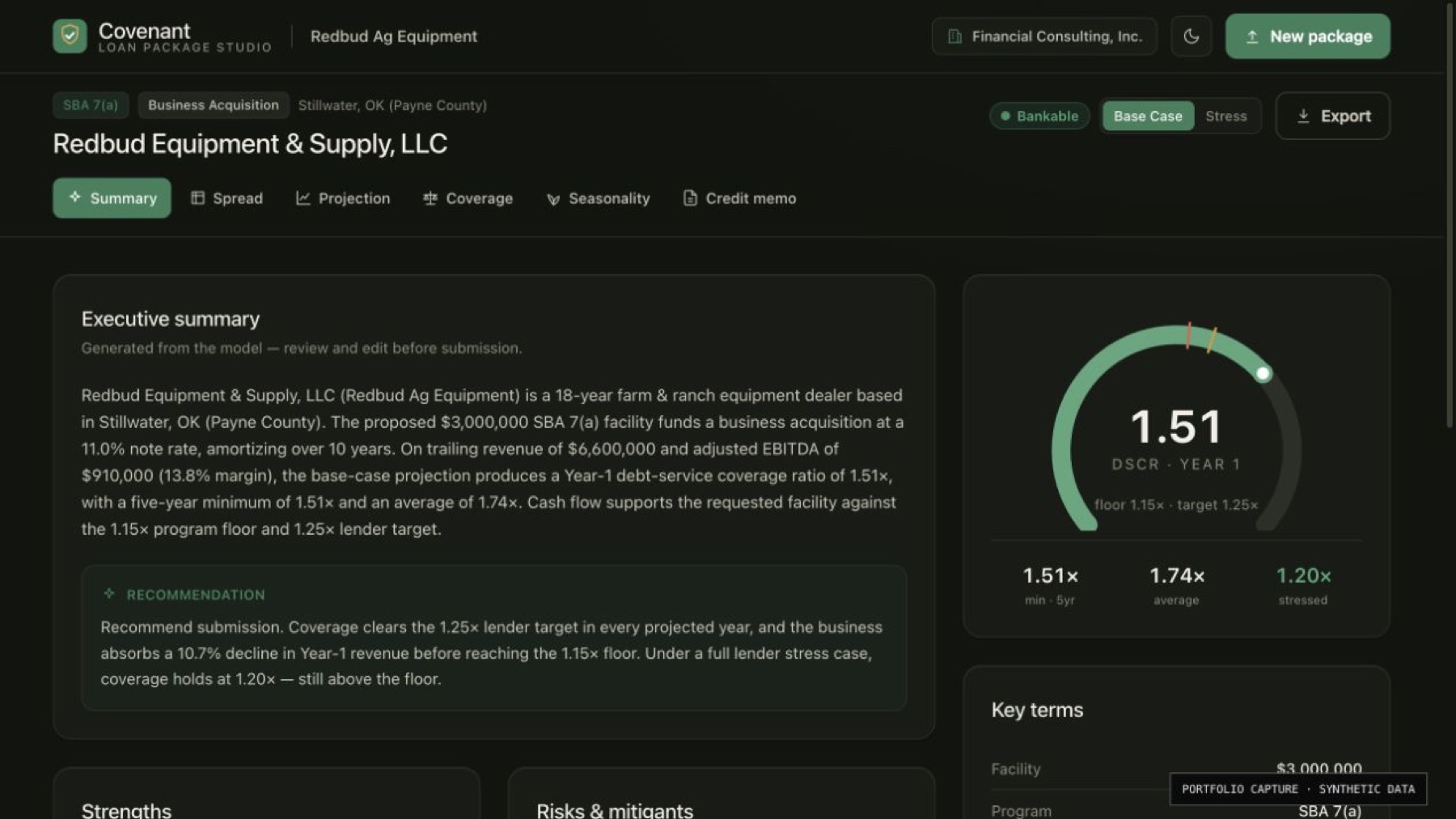
A loan-package studio exploring how deterministic financial calculations can support an AI-assisted narrative. The key design choice was to keep the model from being the calculator.
What I built
- A TypeScript engine for amortization, cash-flow projections, coverage ratios, and stress scenarios.
- A workspace for inspecting a deal and its assumptions.
- Narrative generation grounded in computed results, with a deterministic fallback.
The idea behind it
An explanation is more useful when the numbers can be traced back to explicit calculations. The prototype separates calculation from prose generation.
My contribution
Financial-engine prototype, interface, and narrative integration.
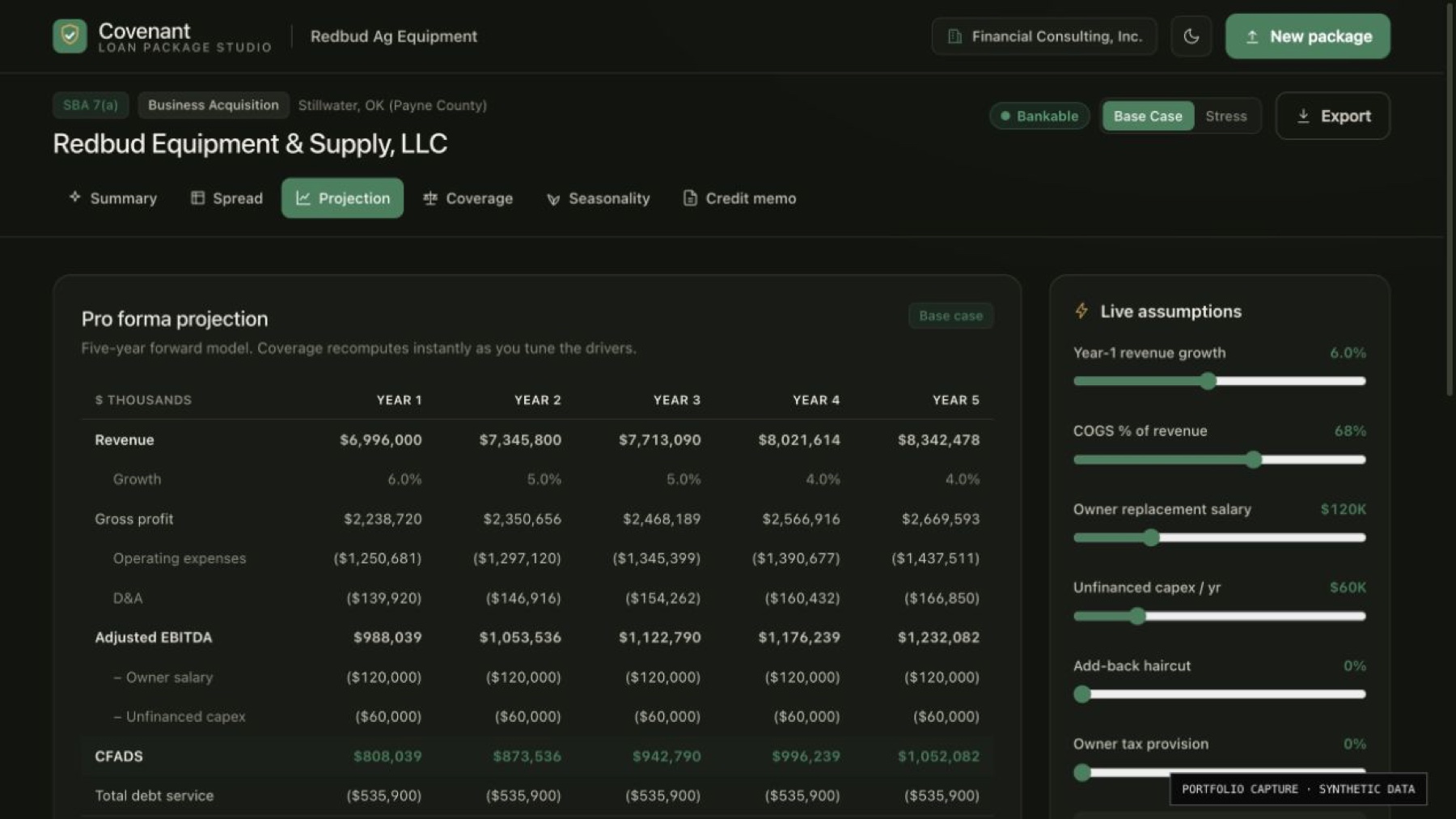
Archived prototype using sample cases and scripted intake. The calculation engine is implemented; some analytical assumptions remained open for further review.
 Web application
Pioneer Timer
Cross-country timing that keeps working off the grid.
Community / team tool
Web applicationPioneer Timer
Cross-country timing that keeps working off the grid.
Community / team toolCommunity / team tool / 2026
Pioneer Timer
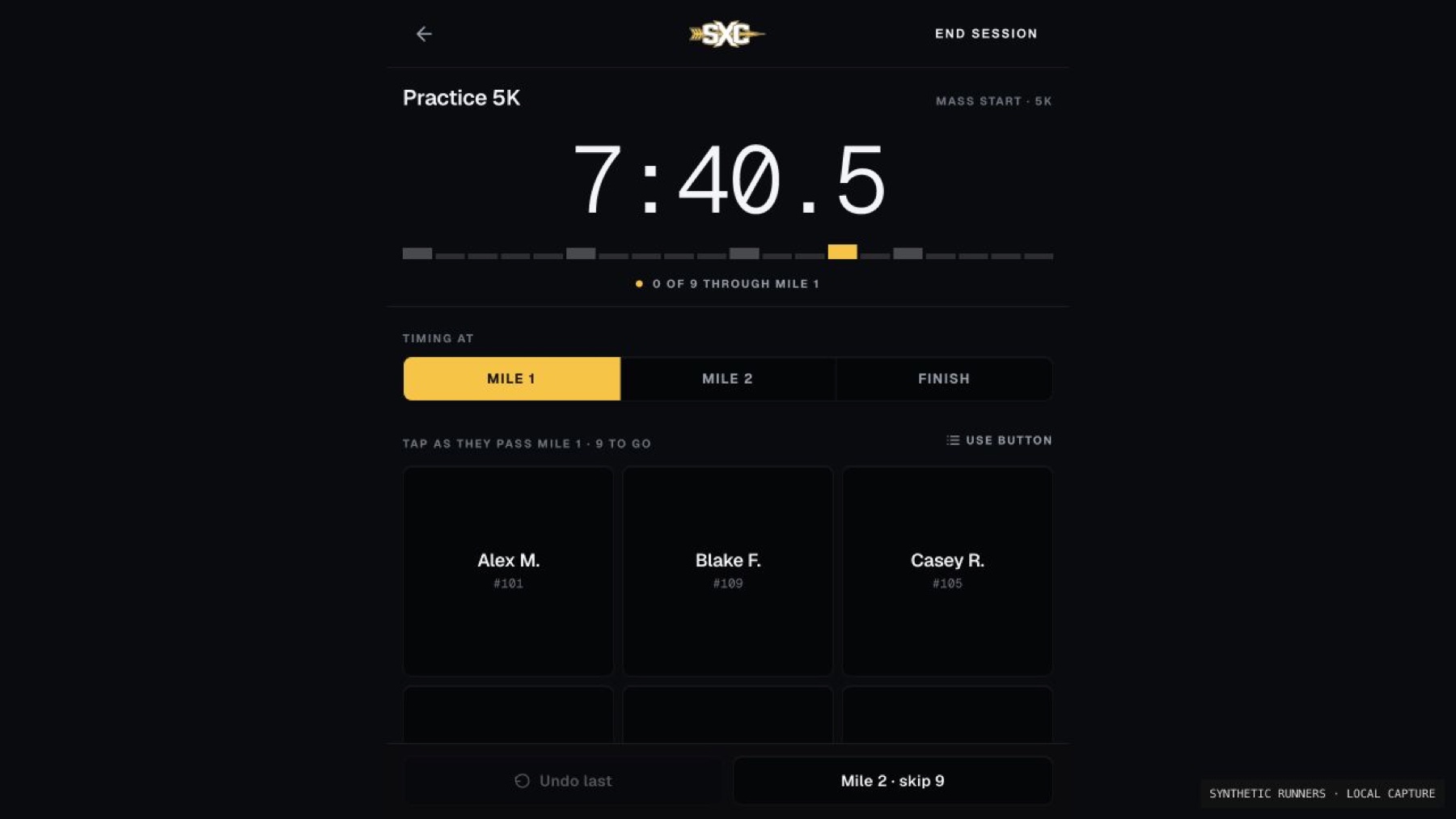
An offline-first timing tool built for my dad's work with the Stillwater High School cross-country team. The interface is designed around the moments when a coach needs fast, readable timing rather than another account to manage.
What I built
- An on-device progressive web app with runner timing and roster tools.
- Shareable roster links and files, plus printable PDF results.
- A compact, precision-instrument interface with stable, readable time displays.
The idea behind it
A tool used beside a race should work where the race happens, even without a reliable connection.
My contribution
Product design, offline application, roster sharing, and PDF generation.
Built as a family/team favor. The hosted app is access restricted. Rosters and results are stored on the device, with explicit sharing.
 Web experiment
Ghost Piston
A virtual engine, synthesized in the browser.
Original audio experiment
Web experimentGhost Piston
A virtual engine, synthesized in the browser.
Original audio experimentOriginal audio experiment / 2026
Ghost Piston
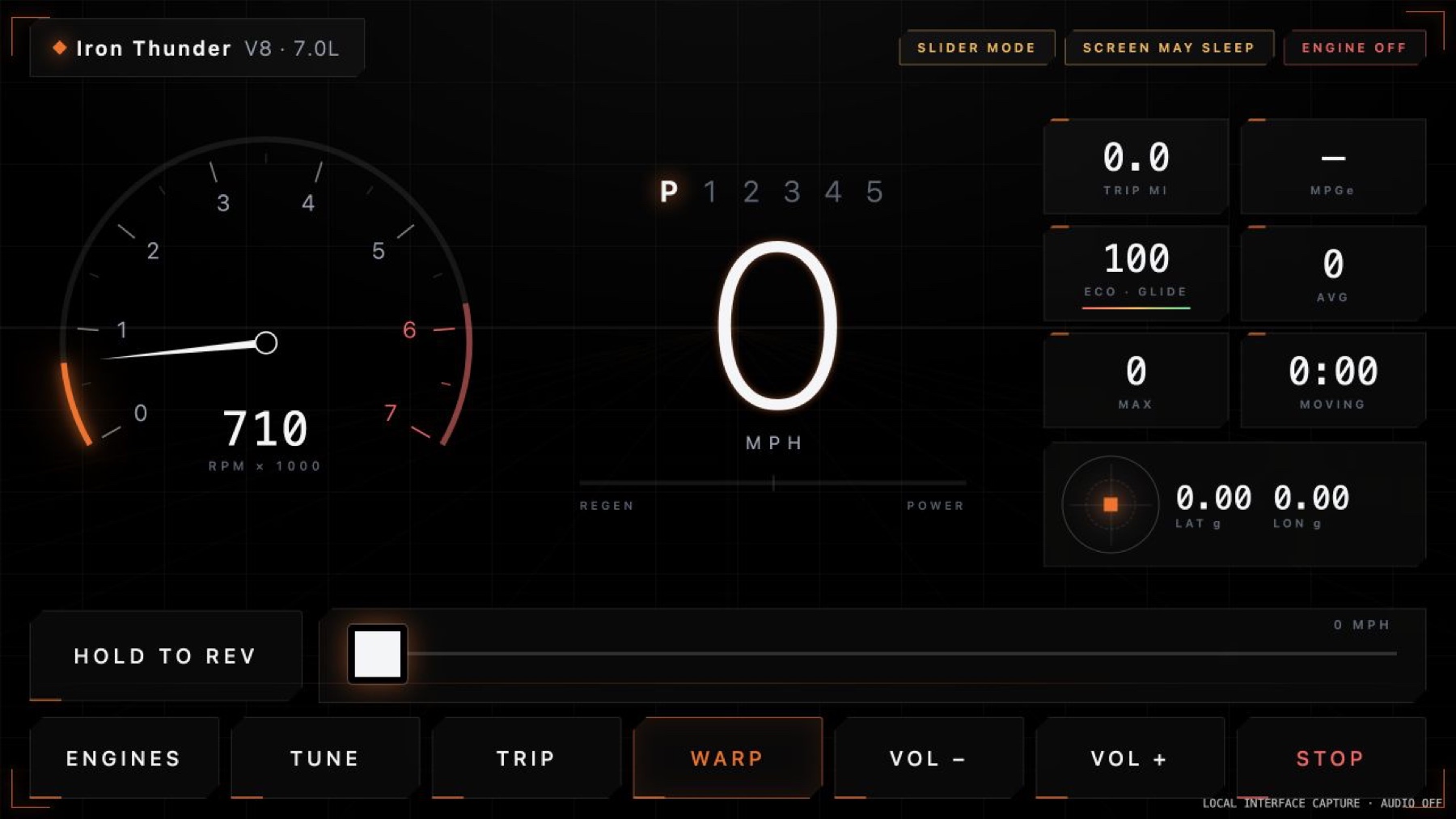
A browser-based synthetic engine-sound experiment for an electric vehicle. Rather than looping a recording, it explores engine character through real-time audio synthesis and a driving-inspired interface.
What I built
- A Web Audio synthesis engine with multiple engine presets and per-cylinder firing behavior.
- GPS-driven input experiments, audio limiting, and a responsive visual HUD.
- A self-contained application with an offline render harness for checking audio behavior.
The idea behind it
Sound design becomes a systems problem when the sound has to respond continuously to changing input.
My contribution
Application design, audio synthesis, browser interface, and signal-validation tooling.
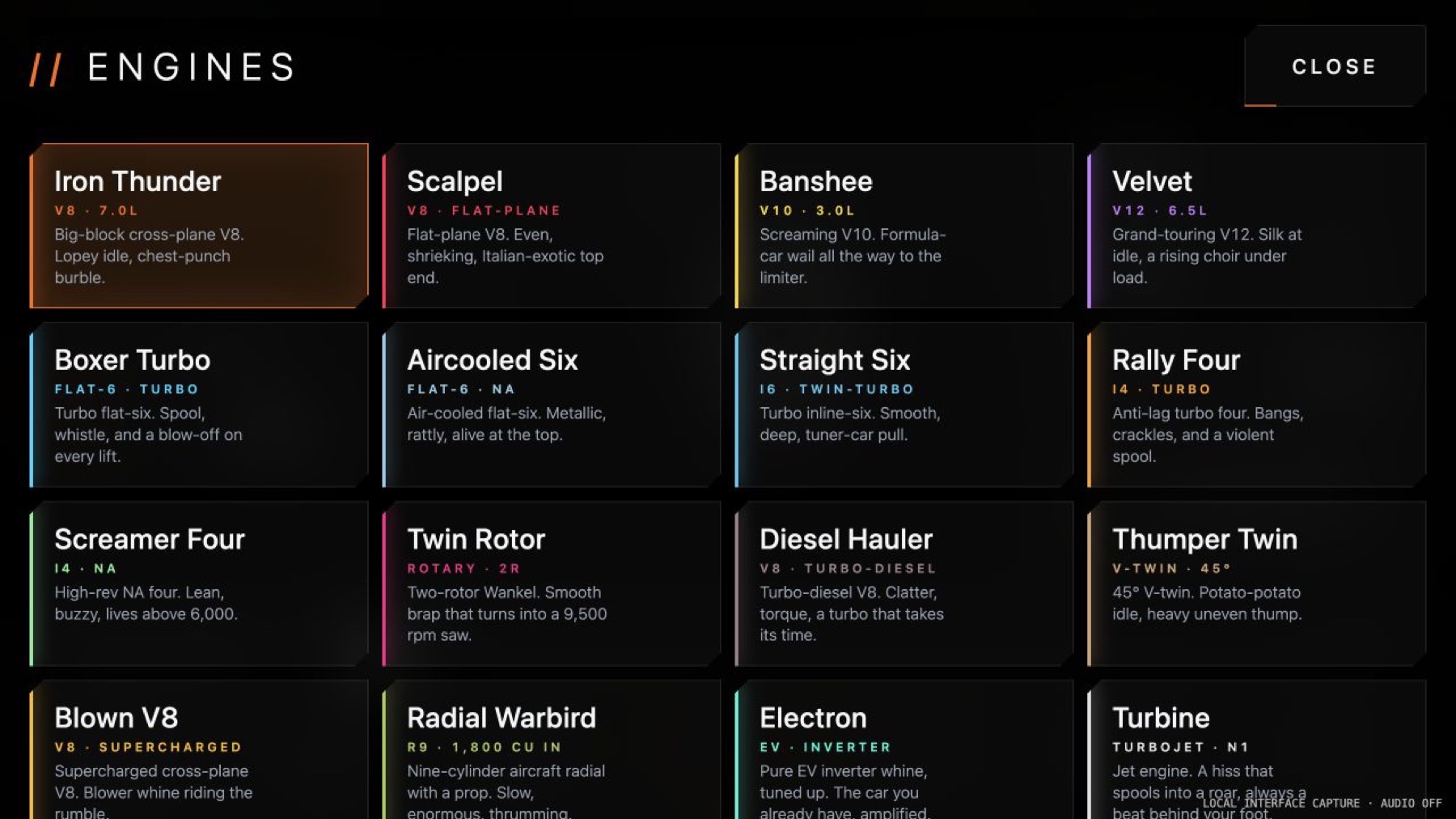
Personal audio experiment. Browser and GPS behavior vary by device; it is not a vehicle control system.
 Experimental port
LibreQuake Hands
A classic shooter, rebuilt around controller-free interaction.
Open-source game adaptation
Experimental portLibreQuake Hands
A classic shooter, rebuilt around controller-free interaction.
Open-source game adaptationOpen-source game adaptation / 2026
LibreQuake Hands
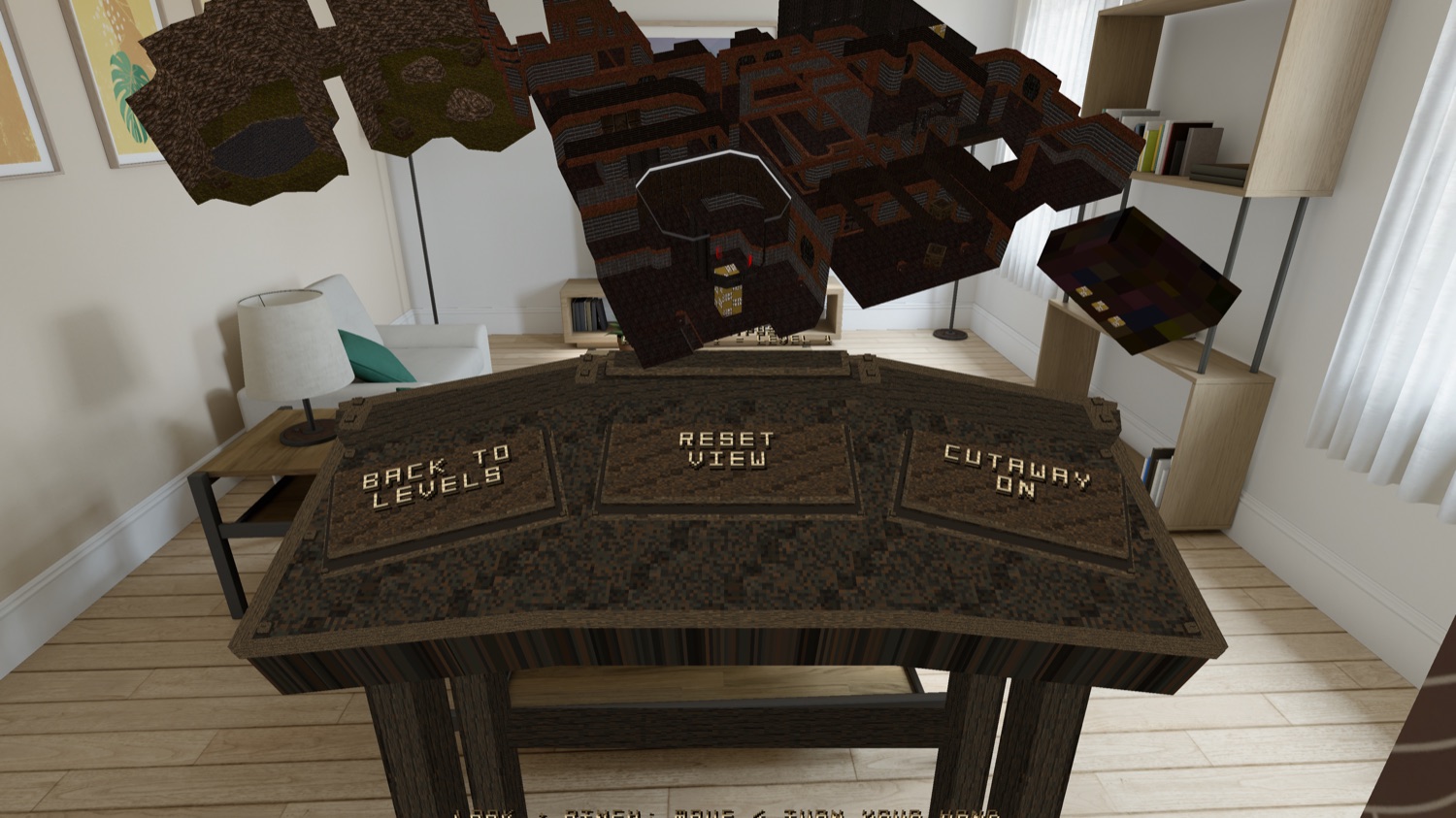
A native immersive Vision Pro adaptation using LibreQuake content, with hand-driven movement and combat, spatial menus, campaign progress, and experiments that turn a scanned room into a play space.
What I built
- Hand-only locomotion, aiming, jumping, and a physical axe interaction mode.
- Immersive rendering, positional audio, campaign saves, and a three-dimensional map viewer.
- Room Hunt experiments using scanned spaces for encounters and pickups.
The idea behind it
The port explores how established game mechanics translate to hands, head movement, and the room around the player.
My contribution
Native adaptation, hand controls, spatial menus, room-play experiments, and testing. Original engine and LibreQuake content retain their upstream authorship.
Experimental adaptation; local and simulator testing do not establish headset comfort or sustained performance. No game package is distributed here.
 Personal development app
Development Hub
Multiple spatial experiments. One consistent way in and out.
Native integration project
Personal development appDevelopment Hub
Multiple spatial experiments. One consistent way in and out.
Native integration projectNative integration project / 2026
Development Hub
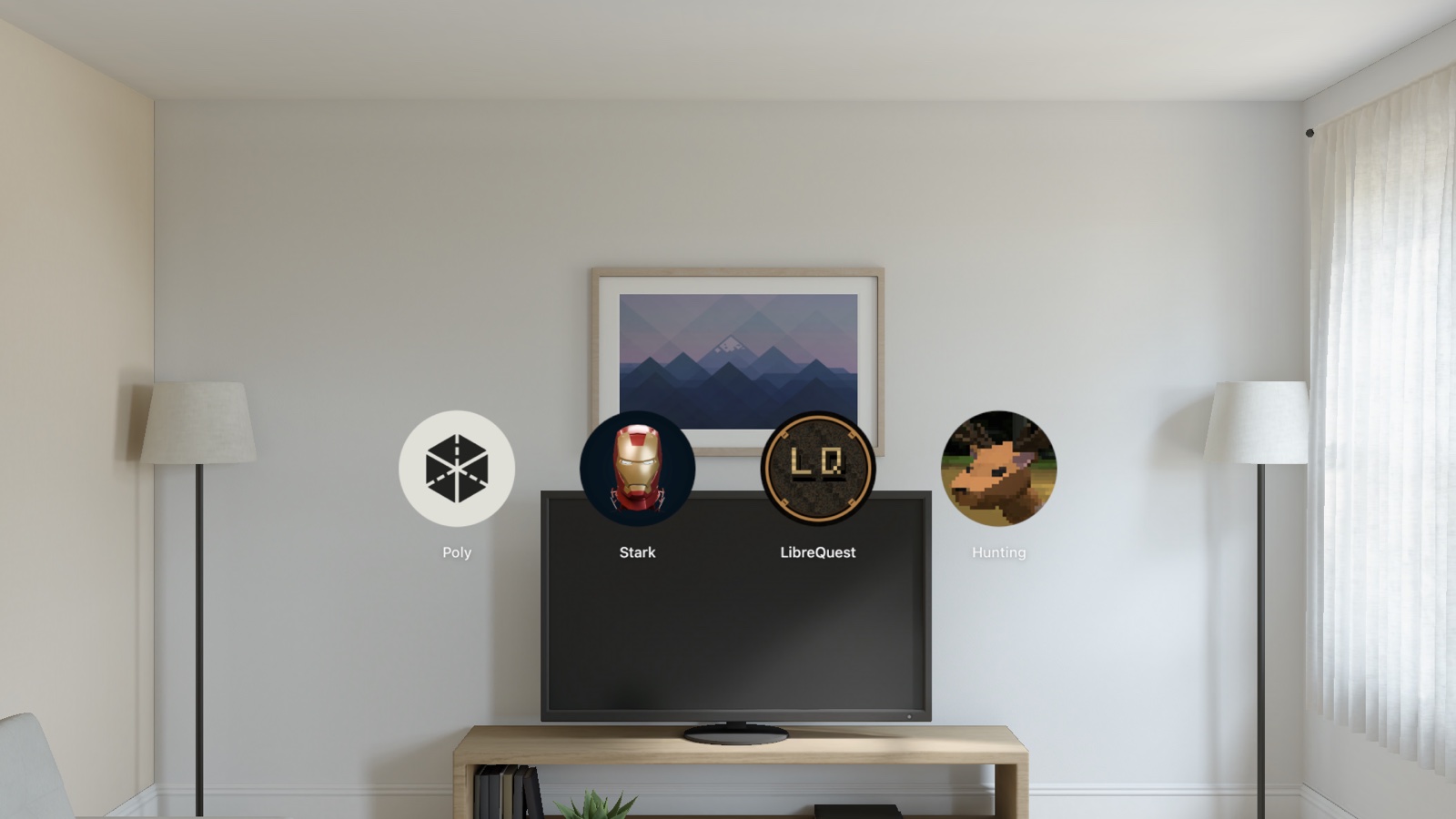
A native host for several Vision Pro experiments, with a compact spatial launcher and shared conventions for entering, pausing, and leaving immersive experiences.
What I built
- A minimal icon-based launch interface for integrated experiences.
- Lifecycle integration across different native and game-engine components.
- Shared attention to exit gestures, resource boundaries, saves, and return-to-menu behavior.
The idea behind it
Integration is its own piece of engineering: several experiences need to coexist without leaving stale scenes, windows, audio, or input behind.
My contribution
Host application and integration work across the spatial project collection.
A personal development environment, not a public app store or a way to redistribute third-party games.
 Experimental port
A Restless Dream
A horror experience designed around a reclined viewpoint.
Independent visionOS adaptation
Experimental portA Restless Dream
A horror experience designed around a reclined viewpoint.
Independent visionOS adaptationIndependent visionOS adaptation / 2026
A Restless Dream
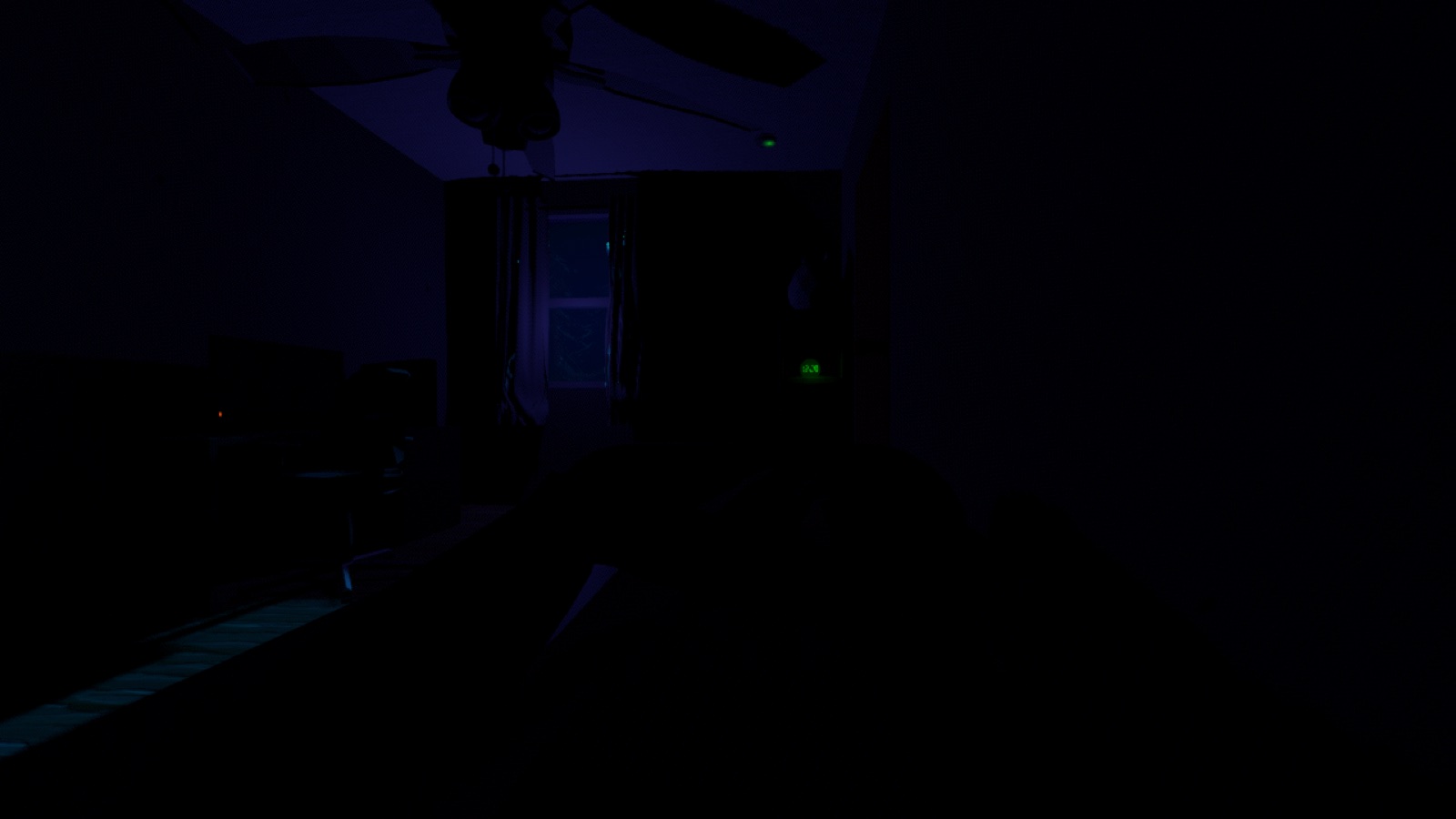
A native Vision Pro adaptation of a sleep-paralysis horror experience, with particular attention to the player's reclined viewpoint, calibration, room-scale presentation, and the transition from menu into the scene.
What I built
- Native immersive rendering and a spatial menu.
- Reclined calibration, gaze-and-pinch confirmation, and revised gameplay controls.
- Work on startup, scene loading, original-content integration, and menu lifecycle.
The idea behind it
When the expected posture changes, the interface has to change with it. This project explores interaction and orientation from a bed or reclined position.
My contribution
Native port and interface adaptation. The original game's story, scenes, and creative assets are not my original work.
Personal native adaptation with local development captures. Original game content retains its upstream authorship; the port is not publicly distributed.
 Experimental port
Hunting Hands
A narrative game, translated into immersive hand controls.
Independent game adaptation
Experimental portHunting Hands
A narrative game, translated into immersive hand controls.
Independent game adaptationIndependent game adaptation / 2026
Hunting Hands
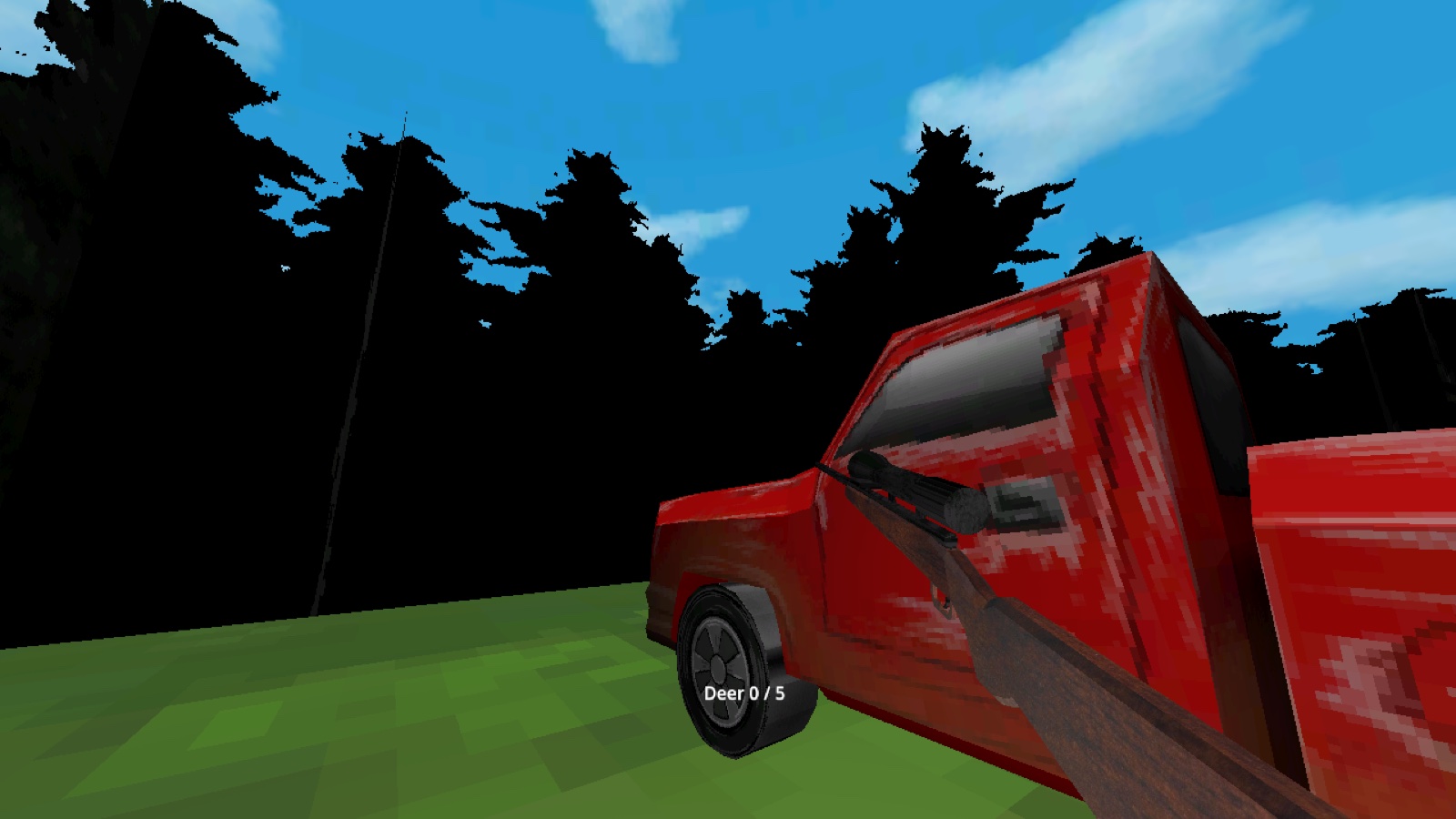
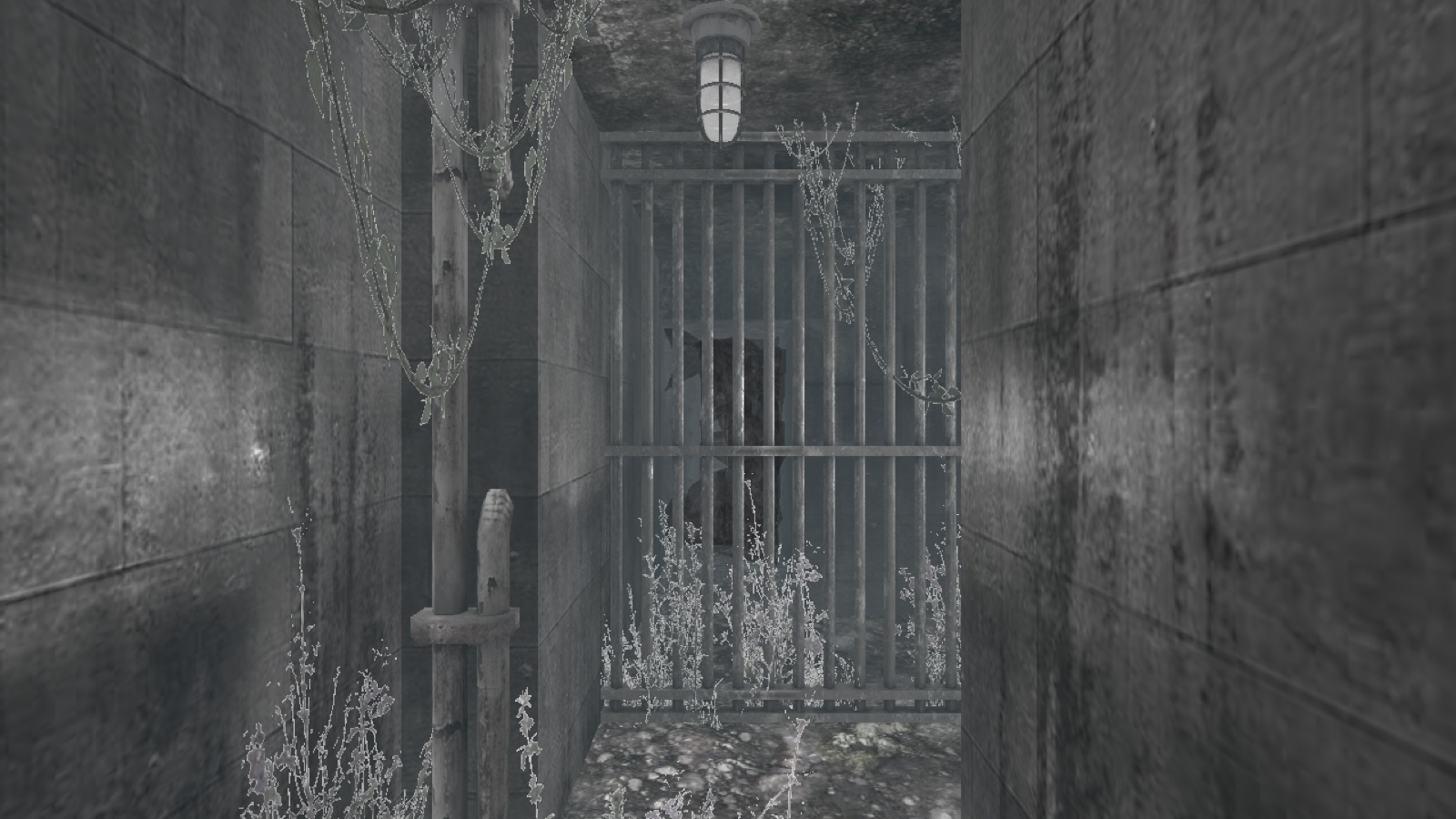
A native Vision Pro adaptation of Hunting by KitsuKell, exploring controller-free movement, rifle interaction, a scope, and narrative progression in an immersive scene.
What I built
- A native Godot/visionOS runtime path with hand input and spatial menus.
- Locomotion, aim/fire, scope controls, pickup/drop-off, and story transitions.
- Tracking-loss input release, pause, replay, and host integration hooks.
The idea behind it
The challenge is to preserve a game's sequence and atmosphere while replacing desktop input with spatial interaction.
My contribution
Native adaptation and controls; original game by KitsuKell.
Personal experimental port. The standalone handoff was locally built and tested; physical Vision Pro behavior was not validated in that handoff. No game download is offered.
 Experimental port
Total Chaos AVP
A complex survival game, brought into a native headset runtime.
Independent game adaptation
Experimental portTotal Chaos AVP
A complex survival game, brought into a native headset runtime.
Independent game adaptationIndependent game adaptation / 2026
Total Chaos AVP
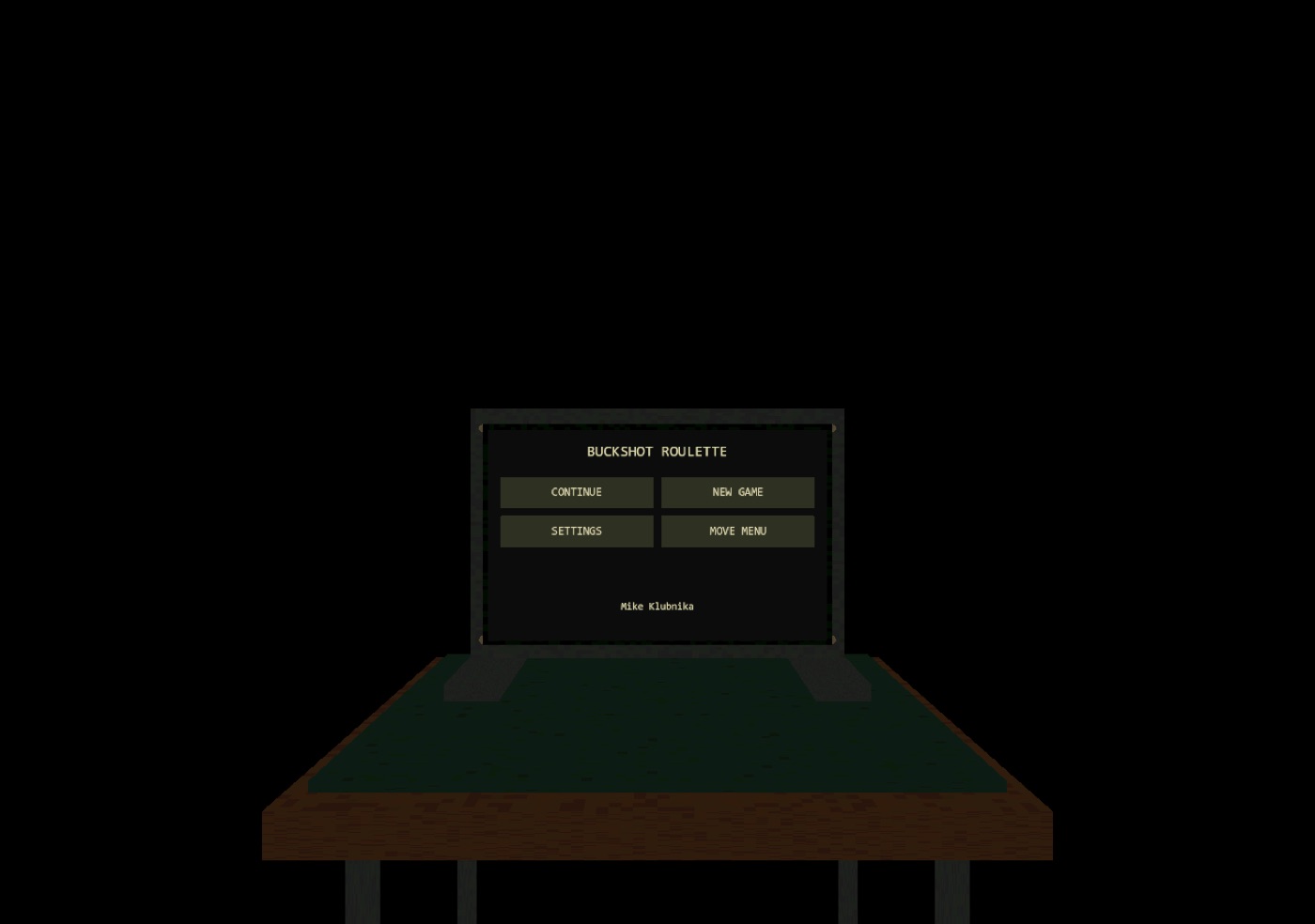
An experimental Vision Pro adaptation of the free GZDoom edition of Total Chaos, spanning immersive rendering, hand controls, spatial menus, and the less visible work of inventory, saves, and lifecycle recovery.
What I built
- A native GZDoom-to-visionOS runtime with stereo rendering and original audio integration.
- Hand-driven combat, locomotion, inventory, crafting, journal, and save/load work.
- A spatial map-case console and recovery paths for interrupted or failed sessions.
The idea behind it
Getting a world to render is only the start. The project focused on preserving the supporting systems that make a long-form game playable.
My contribution
Runtime port, spatial interface, control mapping, and targeted local verification. Original game, engine, and assets retain their upstream authorship.
Personal adaptation of the free GZDoom edition. Verification covered targeted local scenarios rather than a full campaign or complete headset playthrough. The port is not publicly distributed.
 Experimental adaptation
Buckshot Spatial Study
Tabletop tension as a spatial interaction experiment.
Personal port / interaction study
Experimental adaptationBuckshot Spatial Study
Tabletop tension as a spatial interaction experiment.
Personal port / interaction studyPersonal port / interaction study / 2026
Buckshot Spatial Study
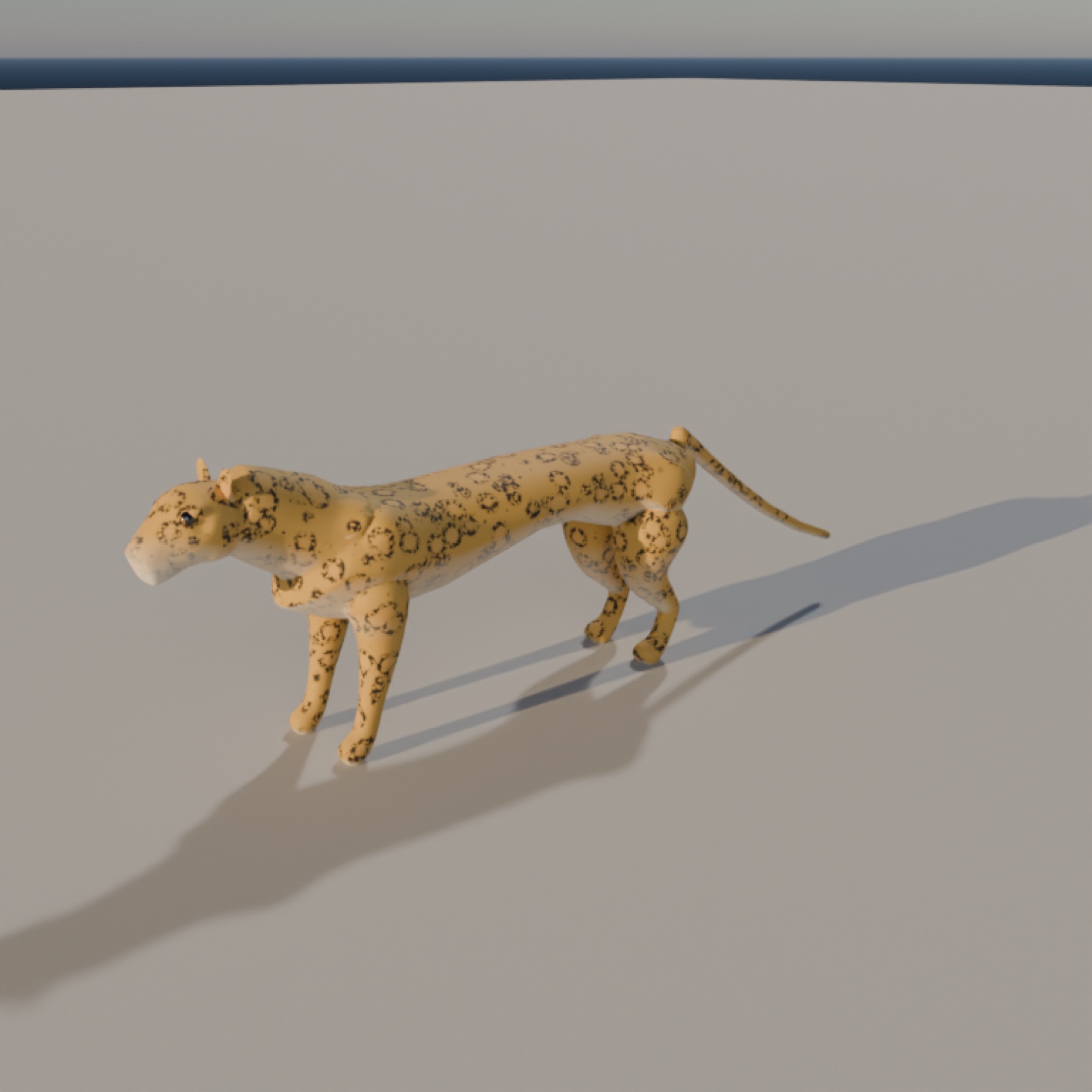
A personal Vision Pro development study around a tabletop roulette-style game, using an existing community codebase to investigate a spatial menu, game presentation, and host integration.
What I built
- Vision Pro integration experiments for an existing Godot game codebase.
- Spatial menu and presentation work within the wider Development project.
The idea behind it
A tabletop game provides a concrete setting for testing where a spatial interface should sit and how a player should interact with it.
My contribution
Port and interface experimentation. Based on OpenBuckshotRoulette by 1503Dev; original Buckshot Roulette by Mike Klubnika.
Unofficial personal study. Original game rights remain with the creator; no source or game assets are distributed through this portfolio.
 Research prototype
WildWorld
Describe a habitat. Explore a living spatial world.
Original environment prototype
Research prototypeWildWorld
Describe a habitat. Explore a living spatial world.
Original environment prototypeOriginal environment prototype / 2026
WildWorld
A Vision Pro research project that turns a natural-language world request into a validated scene specification, then assembles a habitat with procedural environments and behavior-driven creatures.
What I built
- A structured world specification and native RealityKit scene architecture.
- Procedural pipelines for vegetation, environments, creatures, and ambient sound.
- Behavior models and validation tooling to keep generated content within explicit contracts.
The idea behind it
Generated worlds need more than a compelling prompt. The project explores the structure, asset pipeline, and behavior rules that make a requested environment coherent.
My contribution
Application architecture, procedural asset tooling, and world-generation experiments.
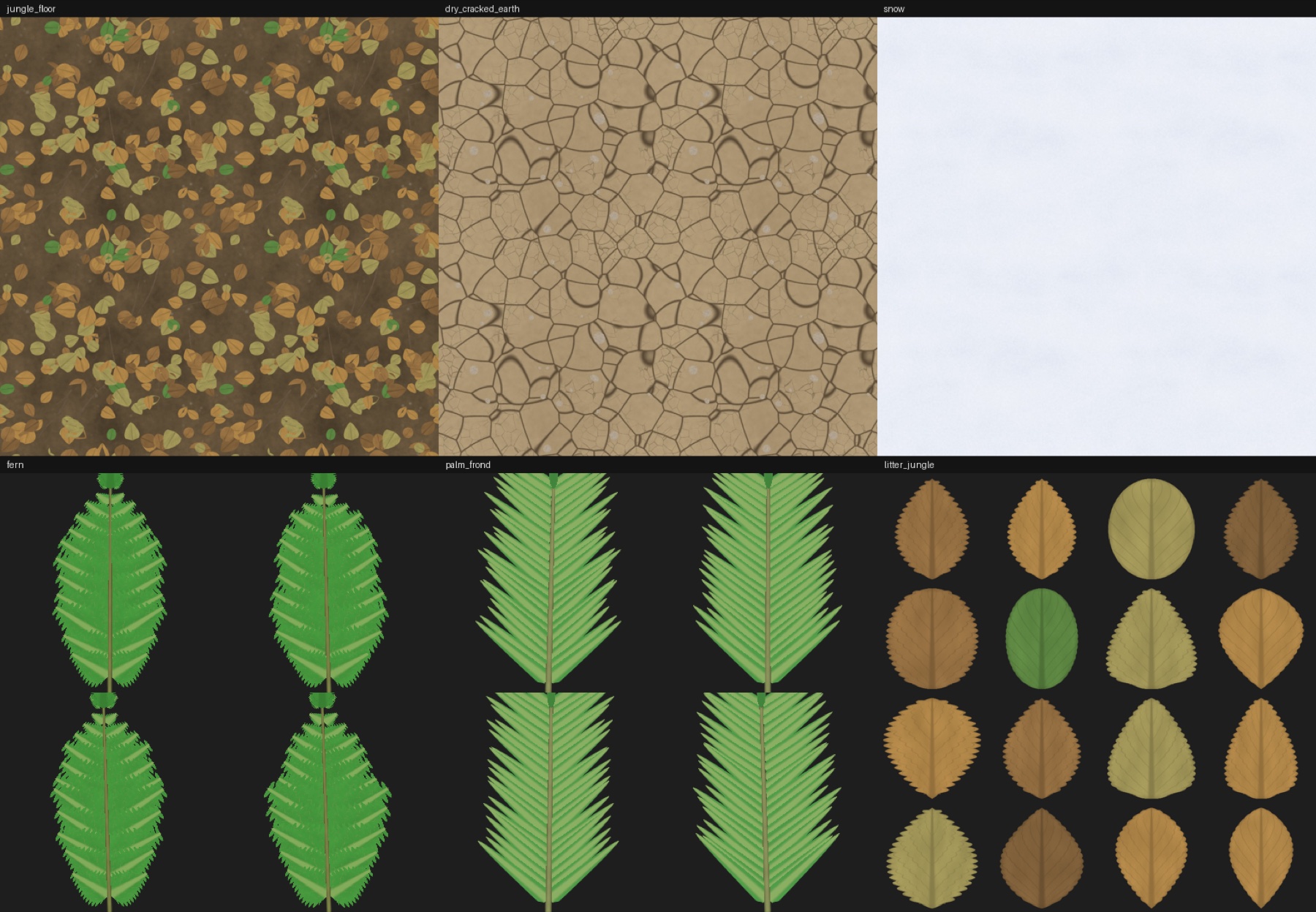
Research prototype with stylized placeholder creatures. Photorealism and fully verified headset behavior are not claimed.
 Desktop prototype
OU After Dark
A familiar campus, reimagined after hours.
Original game prototype
Desktop prototypeOU After Dark
A familiar campus, reimagined after hours.
Original game prototypeOriginal game prototype / 2026
OU After Dark
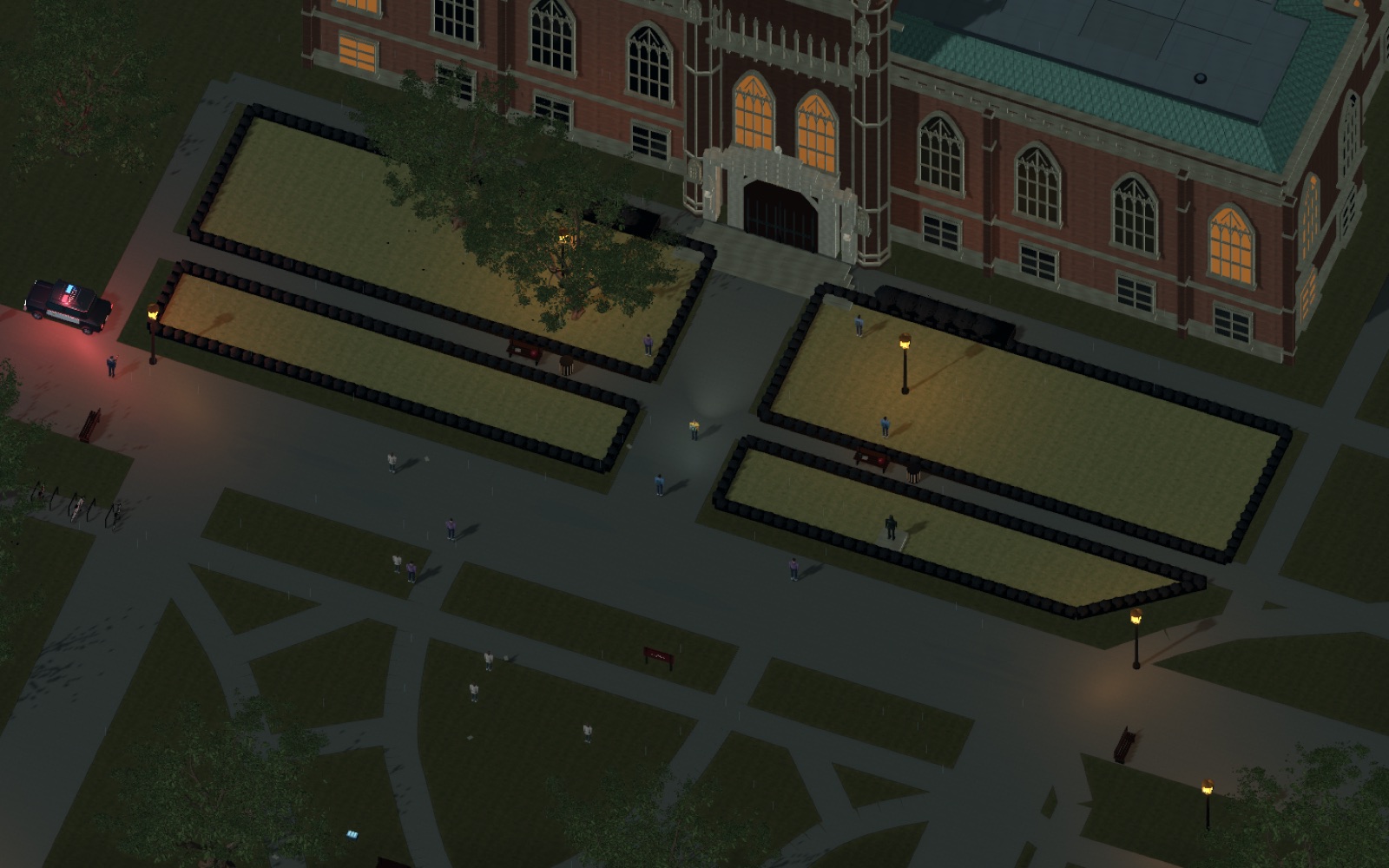
A survival-game prototype set in a stylized interpretation of the University of Oklahoma campus, combining recognizable landmarks, exploration, encounters, and extraction-style objectives.
What I built
- A campus world with mapped exterior buildings and enterable landmark interiors.
- Story and encounter flows, inventory and weapons, voiced scenes, and adjustable audio.
- Save/checkpoint behavior, map navigation, difficulty settings, and a packaged desktop build.
The idea behind it
This project combines world-building with the practical systems behind a playable game: progression, readable objectives, recoverable sessions, and a coherent sense of place.
My contribution
Game implementation, campus-world assembly, interface, and iterative playability work.
Independent student game prototype. Campus and characters are stylized; it is not an official OU product or an exact digital replica.
 Concept build
Apex Custom Innovations
An automotive website with the finish of a custom build.
Uncommissioned website concept
Concept buildApex Custom Innovations
An automotive website with the finish of a custom build.
Uncommissioned website conceptUncommissioned website concept / 2026
Apex Custom Innovations
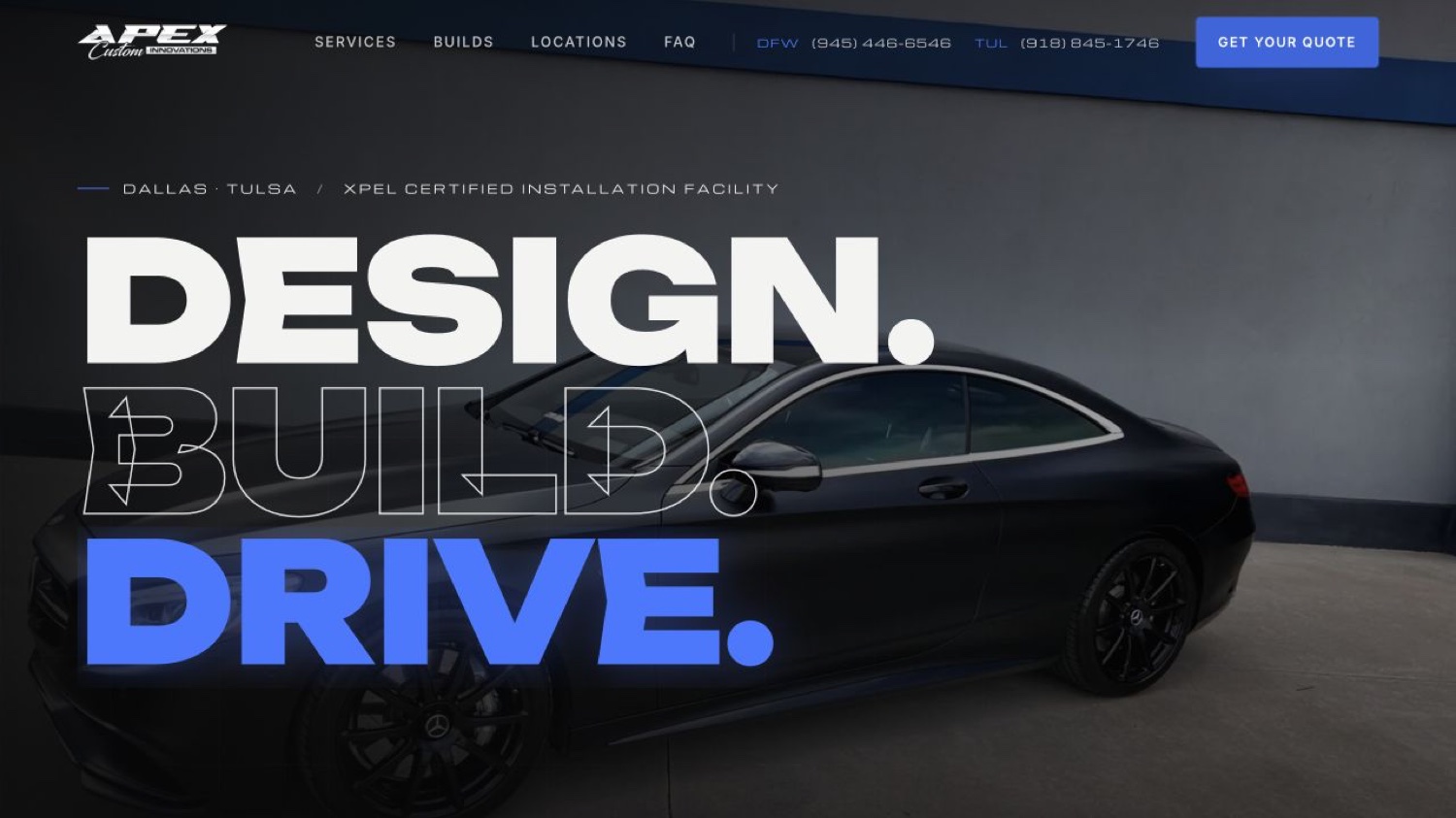
A premium website concept for an automotive customization shop, built around a sharp, restrained layout, strong photography, service discovery, and a clear route to an inquiry.
What I built
- A responsive single-page website with an automotive visual identity.
- Service sections, a gallery, location information, and a quote-composer flow.
- Keyboard, mobile, security-header, and interaction refinements.
The idea behind it
The design aims to let the craftsmanship carry the page, with the interface giving the work room to speak.
My contribution
Website design and implementation as a prospect concept.
An uncommissioned concept, not the company's adopted website or evidence of a client relationship. Photography and brand assets belong to Apex.
 Public websites
Wieman Systems & Personal Brand
A clear digital home for the work and the person behind it.
Original brand websites
Public websitesWieman Systems & Personal Brand
A clear digital home for the work and the person behind it.
Original brand websitesOriginal brand websites / 2026
Wieman Systems & Personal Brand
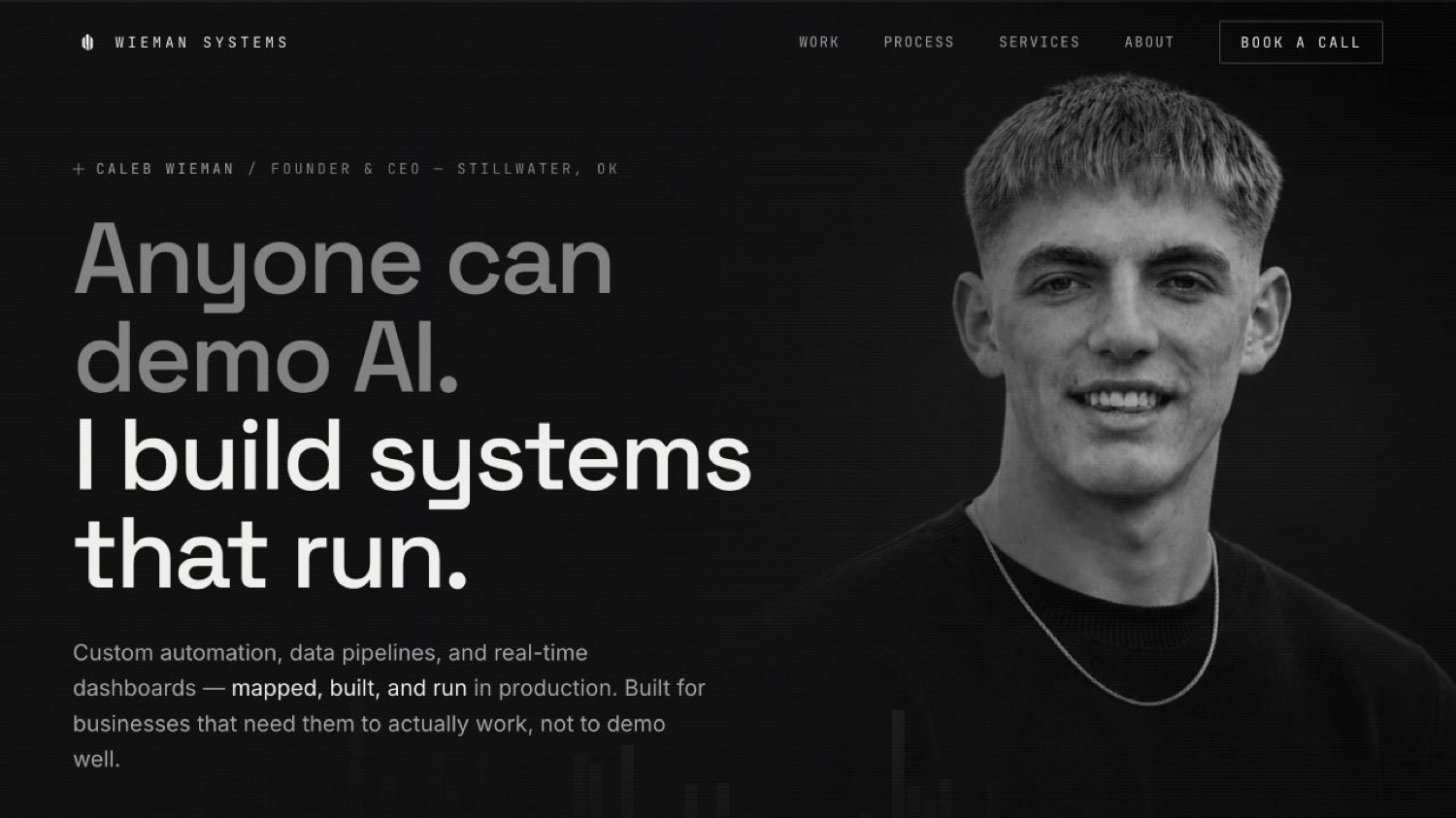
The Wieman Systems website and my personal brand site communicate the same approach from two perspectives: the systems I build and the person accountable for building them.
What I built
- A monochrome visual system with architectural typography, restrained motion, and responsive layouts.
- Service and product pages, contact flows, and a dedicated portfolio.
- Performance-minded static pages and consistent navigation across the personal site.
The idea behind it
A business website should make the work understandable and make the next step obvious.
My contribution
Design, development, content, and ongoing iteration.
The personal site is this portfolio's home. The business site includes the Wieman OS product showcase.
 Internal projects
Email & Productivity Agents
A second pass over the busywork, with a person in control.
Internal automation tools
Internal projectsEmail & Productivity Agents
A second pass over the busywork, with a person in control.
Internal automation toolsInternal automation tools / 2026
Email & Productivity Agents
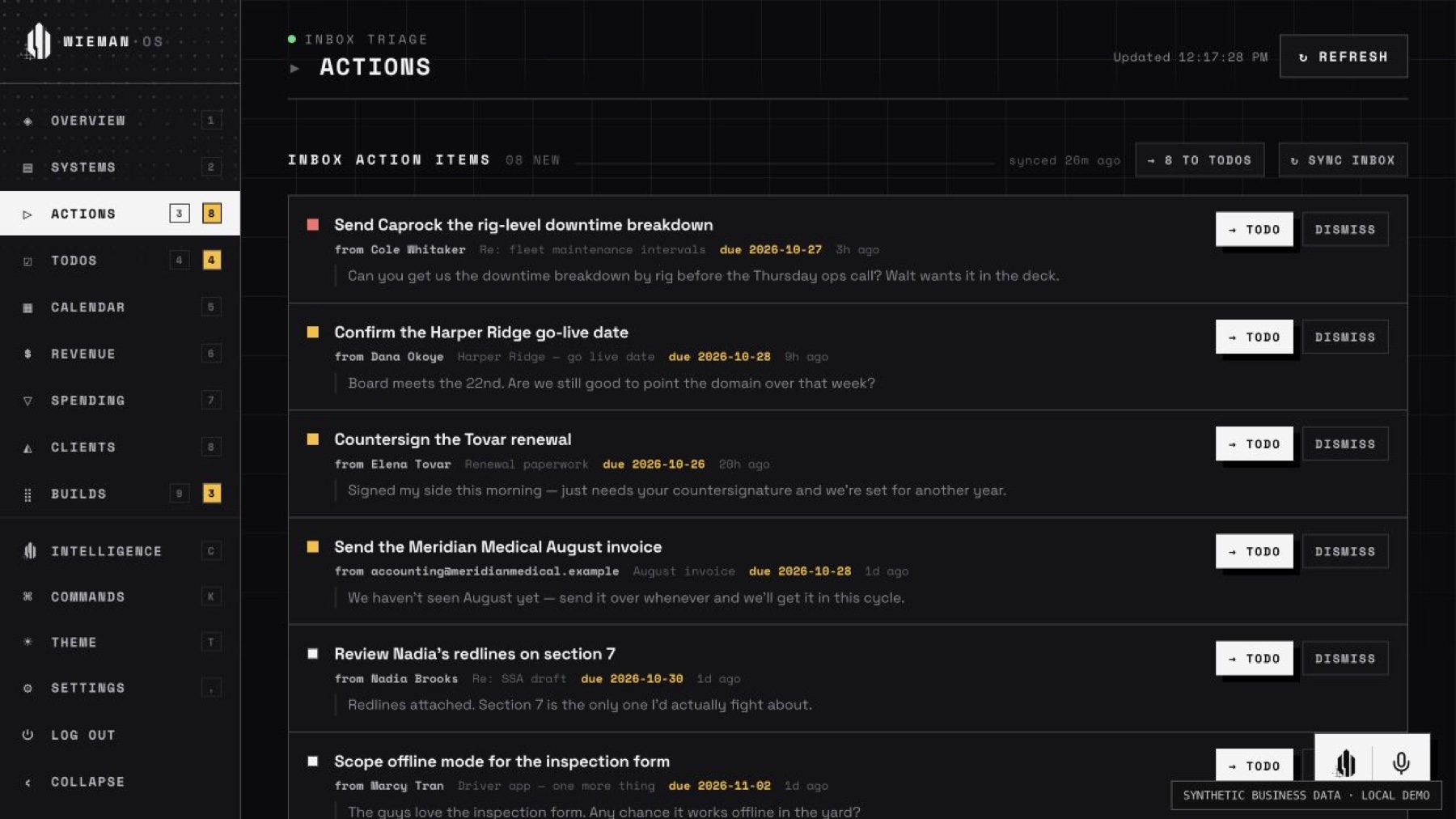
A collection of internal tools exploring inbox triage, drafting, follow-up awareness, and the small recurring tasks that otherwise disappear between work sessions.
What I built
- Email-watch and action-item tooling.
- Context-aware drafting and follow-up workflows.
- Integration experiments connecting the inbox with an operations workspace.
The idea behind it
The value of an agent is often in remembering the small things reliably, then giving the operator enough context to make the decision.
My contribution
Workflow design, integrations, and internal tooling.
The screenshot shows inbox actions in the related Wieman OS console using its synthetic-data demo. Earlier email-watch tools ran separately; the image does not establish that a historical agent is currently running.
 Internal platform
Client Delivery Toolkit
The foundation underneath a repeatable client delivery.
Reusable engineering tools
Internal platformClient Delivery Toolkit
The foundation underneath a repeatable client delivery.
Reusable engineering toolsReusable engineering tools / 2026
Client Delivery Toolkit
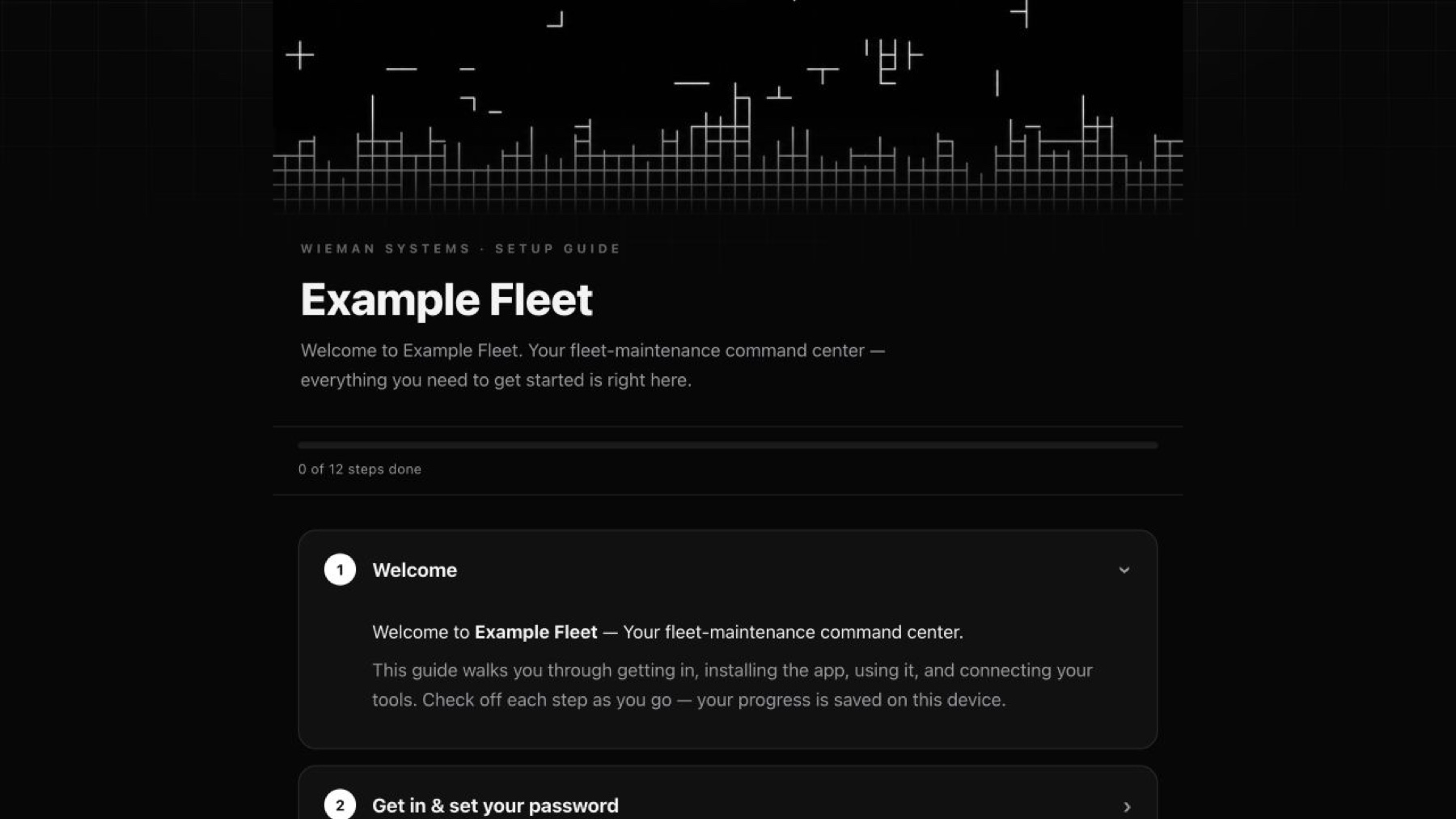
Reusable starting points and delivery tools for client projects: brochure and application starters, onboarding workflows, branded setup materials, and operational utilities.
What I built
- Static-site and full-stack application starters with shared design and security conventions.
- Onboarding forms, client setup guides, invoice tooling, and reusable delivery workflows.
- Project checks and integration patterns that reduce repeated setup work.
The idea behind it
Good foundations let the next project spend more time on the client's actual problem.
My contribution
Tooling, templates, workflow design, and ongoing refinement.
The original setup-guide template is shown with an example client and account-specific fields removed. This internal toolkit supports the wider project collection.
No matching projects.
Try another name or category.
02 / EARLIER CHAPTER
Before Wieman Systems.
AIGENTIC Automations.
The first chapter: websites and automation work for small businesses, before the move to Wieman Systems.
These projects are part of the history. The old deployments were retired; this is an index of earlier work, rather than a gallery of currently available sites.
Stillwater Turf & Power
Local business website
ArchivedDetailing / Clean Slate
Automotive-service website work
ArchivedAsian Massage Spa
Local-service website concept
ArchivedOutrun Games
Entertainment website
ArchivedYucca
Small-business website
ArchivedHillcrest Church
Community website
ArchivedAIGENTIC Automations
The original agency website
ArchivedHistorical builds and concepts, not a list of current clients. Original screenshots and project files have not been recovered for these entries. Unfinished leads and empty stubs are not counted as completed builds.
03 / WHAT COMES NEXT
Have something
worth building?
A repetitive workflow. A product idea.
A different kind of experience.